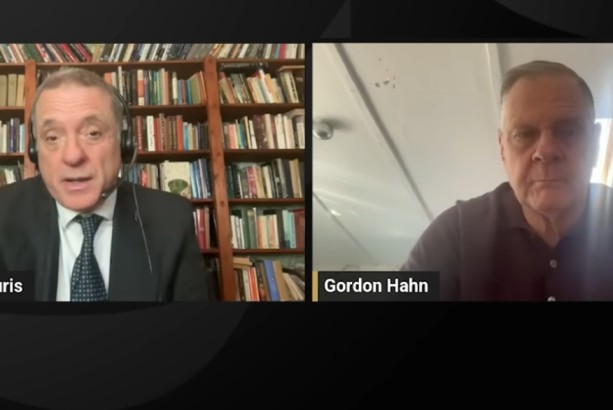
Editor’s Notes: In this episode of the Duran Podcast, political analyst Gordon Hahn provides an in-depth assessment of Russia’s internal stability and its strategic position in the ongoing conflict in Ukraine. The discussion debunks Western narratives of a “pre-coup” situation in Moscow, highlighting Vladimir Putin’s continued domestic popularity and his “balanced” approach to both military and economic policy. Hahn and Alexander Mercouris further explore the murky nature of recent diplomatic efforts and the critical need for a new European security architecture that accounts for Russia’s deep-seated cultural and historical concerns. Together, they analyze why a negotiated settlement remains the only viable path to avoiding a long-term geopolitical disaster for both the East and the West. (April 4, 2026)
TRANSCRIPT:
Introduction
ALEX CHRISTOFOROU: All right, Alexander, we are here with Mr. Gordon Hahn. Mr. Hahn, thank you for joining us on The Duran. Before we get started talking about what is happening in Russia and everything that is going on with the conflict in Ukraine and the diplomacy in and around Ukraine, I know that you have an excellent Substack. So would you like to tell people a little bit about your Substack? I will have that as a link in the description box down below as well.
GORDON HAHN: Yeah, GordonHahn.substack.com. First, let me thank you guys for inviting me. That’s the most important thing. I’m very, very, very happy and very, very grateful that you invited me. On GordonHahn.substack.com, I do a combination of doing political analysis and cultural analysis. I tend to write some big pieces on Russian culture and Russian selflessness, their wholeness, the idea that everything should be integral and whole, and some other things I’m working on. I’m working on an article on anti-bourgeoisism in Russia and some other things. So that’s basically what it goes, mostly political issues, but occasionally a big piece on cultural issues.
ALEX CHRISTOFOROU: A fantastic Substack. We recommend everyone subscribe to Gordon Hahn’s Substack. And once again, it is linked in the description box down below. I will also add it as a pinned comment.
GORDON HAHN: As well.
ALEX CHRISTOFOROU: So Alexander, Gordon, let’s talk about what is going on in Russia and in Ukraine.
Alexander Mercouris on Gordon Hahn
ALEXANDER MERCOURIS: Well, let’s do that, but let me also add my own thing. It is an extreme pleasure for me to have Gordon Hahn here on our program. I should say that I have been reading and following Gordon Hahn for, well, well over 10 years. He’s one of the people who has educated me in many Russian things. I consider that if you want to understand today’s Russia, well, I know of no one better to go to than Gordon Hahn. He has a complete sense of the wholeness of the place, of what Russia is about, the politics, the economics, the military affairs, the security issues, the sense of security, all of those things. And they come together and he’s able to weave a web. And if you really want to understand the country and its politics and where it’s going, I know of no one, I get to say no one as good. So I just want to make that point.
And let’s proceed now with our program. So Gordon, we did a program on the Duran about a week ago, Alex and I. We said Russia recalibrating. We discussed the internal domestic situation in Russia. We spoke about the fact that there’d been a dip in GDP in January, which has caused some issues. There’s arguments and discussions about economic policy. Nothing new for me, but those discussions are taking place. And then, of course, there’s the big issues about relations with the United States, relations with the Europeans, the situation in the conflict in Ukraine, which we’re going to turn to shortly.
And well, there’s been a lot of discussion and rumor about criticisms of Vladimir Putin and of the government. And there’s been some discussions and speculations that Vladimir Putin is in political trouble. Let’s start there. Is Vladimir Putin in political trouble? Are we looking at an unstable situation in Moscow? Some people are even talking about a pre-coup situation. We’ve followed, you followed political developments in Moscow for many years. What is your sense?
Is Putin in Political Trouble?
GORDON HAHN: My sense is that that’s inaccurate. He probably, one can say he has political problems, every leader does, and maybe they’re a little bit more severe because there’s a war ongoing, but they’re not, there’s no crisis. Let’s put it this way. There’s no pre-coup situation. There’s no crisis. I see no evidence of a coup plot being hatched.
There’s no doubt that there is a— and the objection, criticism is being voiced largely from the more hardline wing, patriotic traditionalist wing of the Russian political spectrum. You can mostly on blogs and the social net and to some extent on national TV, which indicates that it’s a reflection of disagreements, I would say, within the leadership about how to move forward. But that doesn’t amount— disagreements don’t amount to political opposition. Generally speaking, political opposition, you have disagreements on almost all issues, right? And then political opposition, even if you have political opposition, it goes just another step to then try to take some sort of illegal measure and remove the leader from power outside of an election.
So that’s one issue. There’s clearly impatience, dissatisfaction with the slowness. If you don’t understand the tactics and strategy that the Kremlin has decided to use in the progress in the war, it looks rather slow. But if you understand the tactics and strategy, you see that it’s purposeless. It’s not through any military incompetence or a bad, necessarily bad strategy. It might be an inappropriate strategy. One could argue that, yes, there should be a harder line in terms of the way the war is being conducted. And that’s a legitimate argument and happens all the time inside countries and states and regimes that are undergoing a war.
The another issue is, I think, that the hardline that’s driving the hardline critique is the mounting drone attacks deep inside Russia hitting oil and gas infrastructure. And there’s also a rise in the number of civilians who were being killed and injured, wounded by these attacks. So that’s creating consternation.
And then you have the sort of the big driver, I think, in pushing things to a higher volume in terms of criticism, was the attack on Putin’s residency, which you pointed to as possibly leading to a new hard line. And there’s no doubt that that played a— I think it’s definitely played a role in raising the temperature among hardliners. There’s no doubt about that.
And I think in addition, then you add in the recent events with Iran, the Iranian War, right? I think because the Russians, for various reasons, Iran is seen as a near ally, a strategic partner. And Alexander Dugin, for example, has written an article saying, “Iran today, Russia tomorrow.” So they see this as sort of a— and then you add in the fact that the beginning of the Iranian War began with a decapitation attack. On the background of what had happened in Valdai with the apparent attempted assassination of Putin and Trump’s alleged role in that, in freezing Putin in place by telling him over the phone that “I’m going to get back to you, I’m going to go talk to Zelensky, stay in place.” And there was a legitimate wonder about whether Trump was engaging in what might have been an assassination attempt.
So I think all those factors have led to outrage on the more traditional side of the political spectrum. So there’s no doubt about that. The question is, does this amount to a pre-coup situation? Does this make a pre-coup situation? And there’s no evidence. There’s no evidence of collaboration between different factions. There are no defections from the regime. There’s no criticism from high-ranking officials. There’s only been one criticism that I can find of Putin by name in the state media. It wasn’t actually by name, but it was clear who he was referring to and so forth.
Breaking Down Russia’s Political Structure
So if we break it down into different parts of what constitutes the political structure, you could say, in Russia, you have the elite, then you have a near-elite group, and then you have the general public. So if you look at the ruling regime group, there’s simply no evidence, right, of any kind of planning of a coup, as I mentioned earlier. But there’s an acknowledgment, there’s a disagreement.
For example, Lavrov, both times when he mentioned, on March 5th when he addressed a group of ambassadors, a conference of foreign ambassadors in Moscow, he made the point of defending the Kremlin, Putin, if you will, against charges that there’s no need to be engaged in negotiations. And he specifically referred to this decapitation issue. So that’s one aspect. But there’s no evidence that there’s internal regime struggle for power, let’s put it that way.
Some have pointed to, in fact, many people actually have pointed to the idea that Lavrov was one of the main discontents in the hardline faction, right? Because on one side, the ministry had been sidelined in favor of Dmitryev as a negotiator, and then at the same time he was dissatisfied, or he was using dissatisfaction with the talks in order to get MID back in the talks rather than Dmitryev leading the whole process. So in that sense, he may have become a hardliner, but there’s no evidence for that because we have Lavrov twice now in March coming out and defending the regime against this kind of criticism.
And then you have Dmitry Trenin. At one point, one analyst pointed to Dmitry Trenin’s defection allegedly to the hardline camp based on an article he wrote in which he essentially argued that because Trump had now sided with the neocons as opposed to MAGA, that this indicated that there was a shift in Trump’s overall orientation and therefore that Russia needed to respond with its own hard line. But that overlooks the fact that you’ve had people like Sergei Karaganov arguing that nukes should be used on Europe, for example. So this hardly is evidence of a coup plot.
Again, there are challenges. I don’t want to go through all those challenges. Maybe we can talk about that later, that Putin does need to address. So I want to move on to the other groups and talk about that a little bit.
Public Opinion and Putin’s Approval Ratings
Let’s talk about the public opinion because I don’t want to get too bogged down in the near group. That’s been basically hashed out in the press in the near regime group with people on state TV arguing that the war is being mismanaged and so forth. But if we look at public opinion, you’re not going to have any regime split. You’re not going to have a coup plot, a pre-crisis situation unless the public is extremely disenchanted with the leader. And that’s, you know, just look back at the Gorbachev era and the Yeltsin eras. In both cases, there was disenchantment with the leader and that provoked coup attempts.
So there’s this claim being made in the Western media that there’s this great war weariness among the general public. And that this is part of a pre-coup situation because the elite is disenchanted and now the public is also disenchanted. If we look at this more objectively, one claim is that, for example, a Sion poll was cited where 38% support continuing the war and 59% support moving towards negotiations, which is how the Western press article covering this mentioned it. And then they cite also a Levada poll, which shows 67% say the country should move toward peace negotiations.
Well, this is deceptive wording, right? Because the fact is Putin is engaged both in war and peace negotiations, right? So this is not the idea that Putin’s position is that there should be no negotiations and that the people are aligned against him because their negotiation is a— it’s a straw man. It doesn’t— this problem simply doesn’t exist.
Second of all, it’s taken in the context that this criticism that we see— well, I’ll go into that later. If you look at the level of decline in Putin’s performance, they’re citing a fall from 76.7% to 75% in trust and 72% to 70.1% in performance, as some kind of drastic decline that has created, quote, “a near-paranoid anticipation in the Kremlin.” And this is just completely absurd.
And if you look at the history of opinion polling during the Putin era, I did this specifically for this broadcast to bring up this point. You have a 70— Levada shows an 80% approval rating. I’m showing you these figures of a mid-70s, low 70s. Putin had, in April in 2020, a 59% approval rating. In August ’21, he had a 61% approval rating. From March 2011 to February 2014, he never reached 70% approval rating. He was under 70%. Then the Maidan, incidentally, to get it going on the side, then the Maidan coup occurred and his rating soared.
From July 2018 to February 2022, he was never above 70 again. And when did it go up? February ’22, when the special military operation began. So moreover, there’s room for decline in Putin’s rating because of the rise in Putin’s rating when the SMO began. There’s room for it to fall because it would fall back to where it’s normally been, which would be around 70, 75. Sometimes it goes up to 80 as it is now.
So the idea that Putin is in some kind of desperate situation is absurd. There’s no way elite actors are going to engage in a coup in the middle of a war when the president is still popular, even if there’s some minor dissatisfaction about how the war may be going. And generally speaking, if you look at public opinion polls in general, if you look at Putin’s rating and then compare it with the respondents’ attitude towards the situation in the country, Putin’s usually about 15 or 20% higher than the level of approval for the situation in the country. So in other words, the disapproval in the situation in the country doesn’t really reflect on him necessarily. He’s sort of a Teflon president. So I see no basis whatsoever to be able to argue for this kind of thing.
The Military Strategy: Attrition and Advance
ALEXANDER MERCOURIS: I completely agree with you. I should say that in my experience, in order for there to be a political crisis in Russia, a coup-type situation— this is true in Khrushchev’s day, it was during Gorbachev’s day— you have to have two things. You have to have certainly disaffection in the country, a sense of disaffection, and above all, you have to have evidence that there is a split at the very highest level of power in the Kremlin, within the inner core of the political system. And there is absolutely no sign of that.
And I’m going to say something else. I think that at a time of war and of political tensions with the West, I think the entire instinct of the political system, especially in a country like Russia, is to close ranks, not to start experimenting with plots and coups and intrigues and that kind of thing. And besides, I don’t think there’s any actual loss of confidence in Putin anyway. I think most of the people who work with him, they may disagree with him on various things at various times, but overall I think they still have confidence in his continued ability to lead the country. So I see no sign of a coup.
I think all of the speculations that there is a coup, for exactly the reasons that you so carefully set out, I just don’t see them there either. Let’s talk about the military situation in Ukraine and about the war, because this is something that people always bring up. We have to face it every program that we do, Alex and I, about the war. We have these people who come back who say, why isn’t the war going faster? Why isn’t the Russian army advancing more quickly? What is Putin doing? Is Putin weak? Is he weak towards the West? Can you respond to some of this and give us some ideas of what your explanation for the way the war is being conducted, what your feelings about that are?
GORDON HAHN: Well, if you look at basically the way Putin described the war as a special military operation. This was specifically said to indicate and/or a reflection of the fact that they did not declare war on Ukraine. If they had declared war on Ukraine, gone to the Duma and so forth and declared war on Ukraine, you would see a completely different kind of military operation. You would have massive tank and personnel carrier attacks, frontal attacks, and so forth and so on.
And the reason why I think Putin decided— there are several reasons why Putin decided not to engage in this kind of mass war that we’ve had in Europe since the Napoleonic era, really— is first domestic political reasons. Not necessarily the most important, but first comes to mind is domestic political reasons. He doesn’t want to have a large number of casualties because this is going to provoke dissent and discontent inside the country. So by using the tactics they’ve been using— you call them, what was your term? I use the term attrite and advance. You use the term, was it aggressive attrition?
ALEXANDER MERCOURIS: Aggressive attrition. That’s right.
GORDON HAHN: Right. Right. Basically the same idea. I just added the idea that they engage in a phase of attrition and then when the enemy becomes weak, they advance forward territorially. But the main object, as you’ve noted and other military experts have noted, is that the idea is to destroy the fighting force of Ukraine. So this means that, of course, territorial gains are going to be incremental. That’s because this is not the main task.
Now, at some point they may have to go over into targeting the capital because they’ve realized that Zelensky is not going to engage in any peace talks seriously anyway, or there’s some sort of provocation, or the Maidan regime begins to collapse and Russia is going to have to step in to create order. There are all sorts of scenarios where this strategy and these tactics may have to be changed. But for now, this is the process.
Putin as a Balancer: Finding the Golden Mean
Second is, they say that Putin is weak because he doesn’t want to confront the West. Well, he’s not being weak because he doesn’t want— he’s being smart. He doesn’t need to have a war with NATO. He doesn’t need to have NATO directly involved. Putting boots on the ground, though I don’t think it would create a great problem, it would certainly lead to likely a situation where Putin might have to declare war on Ukraine, and he would also be fighting a larger number of forces, which would increase the casualties. So it essentially undermined his entire strategy for managing the war. So it’s not a matter of weakness, it’s a matter of being careful in intelligence.
I’ve always argued that Putin is kind of a balancer. He always finds the golden mean between extremes. And so what you’re seeing now emerging in Russian society is a frustration which is leading to a sort of extremist inclination that, well, we just need to get this thing over. Let’s bomb the decision-making centers. Let’s kill Zelensky. Let’s just take all the reserves of 100,000 reserves in and around Ukraine, maybe 200,000, and just go in full force and drive to the Dnieper at all costs, regardless of casualties, and get this thing over with. And I think this is an extreme position.
Putin basically tends to play the role of a balancer inside the regime and inside the society. He’s sort of the grown-up in the room, and he tries to find the golden mean between different extremes. So on the one hand, he’s not for a free rein market economy, but he’s not for a full state market economy. He’s not for a completely liberal republic, but he’s also not for an outright dictatorship. He’s balancing between those types of regimes. He’s not for American-style freedom of the press and freedom of speech. It’s a more toned-down version, but you also have something very similar in England. For good or bad. It’s their country. It’s not my country. So I’m not going to make recommendations. But this is Putin’s approach. It’s his country and this is his approach. But again, it’s a balancing act between different extremes.
And I think that he will maintain that for as long as he can unless something really drastic happens and he’s really pushed to change strategy. The Kremlin had told the Americans that they were giving them 2 months to withdraw from the Donbas or there’d be a new position adopted by the Kremlin, presumably meaning in talks. I said, what? Well, it looks like Alex may have been right. There is this new hard line. Putin is now addressing this criticism inside the country by doing this. But it turned out, according to Peskov, that this was never said to the Americans, which brings up other issues about Trump and Zelensky and lying.
Russia’s Response to Western Escalation
ALEXANDER MERCOURIS: Well, indeed. I don’t place any weight at all on Zelensky’s comments about this ultimatum. I don’t think the war’s won. I discussed it in a program. Anyway, I would just make one important point here actually, based on both of the things that you’ve said, which is I think people outside Russia need to understand that this policy of balance that Putin follows in domestic policy, in foreign policy, in the conduct of the war is popular. The polling figures that you spoke of, the 70%+ approval ratings that he’s getting, confirm that this is very much in tune with the broader sentiments of Russian society now.
I went to Russia in June last year, and I attended a conference with lawyers, commercial lawyers mostly. In other words, the sort of people who previously were amongst the most the people who wanted to integrate with the West most, and they were broadly satisfied and supportive of this approach. I didn’t get any sense from them, or indeed from other people that I spoke to as well, that they actually yearn for vast tank armies to be unleashed on Kyiv in the way that people say. They feel that the man in charge has it under control and that he’s achieving it well. So that is my sense. Outsiders may find this difficult to understand and they may criticize it, but in Russia it is broadly supported.
Now, there is one thing I would just like quickly to address fairly briefly, which is that there is this view that you often hear that Putin taking this incremental approach, that it’s seen in the West as weakness, and that the result is that it encourages escalation, and that for that reason it’s dangerous. Any thoughts about that?
GORDON HAHN: Well, there is something to that. If you look at— I forget when it was, was it September 2024 when Putin first addressed the issue of missile attacks deep inside Russia in public? He was standing before the Ark there in St. Petersburg that leads to the palace square, and he mentioned the fact that the Kremlin was well aware that to target and fire these missiles, they needed codes from the United States and maybe even intelligence to search out targets, and that if this continued, there would be a response. And as far as I can tell, there hasn’t been a response.
Now, one can argue, and you’ve made this argument, and it’s interesting and may actually be right on, is that the Iran War provided him a convenient way— maybe he was waiting for that, maybe he was waiting for a convenient way that wouldn’t provoke NATO entirely, a convenient way to respond militarily, and that is by assisting the Iranians against the United States and Israel in the war in Iran, the Third Gulf War as they’re calling it. There was also a report somewhere, I can’t remember where I read it, that there was a discussion between Russians and Americans and the Russians proposed the idea of, well, you stop supporting Ukraine and we’ll stop supporting Iran. And the United States apparently said no. I don’t know if that’s verifiable. It’s not verifiable as far as I know, but take it for what it’s worth.
I think that is an issue. So yeah, I think it is an issue. It’s a problem for Putin. And again, it’s another place where he’s forced to walk on eggs and walk a tight line. And one can criticize him here or there. Maybe he could have found ways to address it. If you think about it, I thought about this quite a bit. What could he do? The logical thing would be a major uptick in the way he deals with Ukraine. This way he would avoid the problem of provoking NATO and expanding the war. And that would be, for example, to attack the decision-making centers even in Kyiv. There were a few attacks, I think about 5 or 6 days ago, the Russians hit 3 different SBU centers in regional capitals, as I recall. And I thought that maybe that was going to be the beginning of something like that, and they would begin to work their way up, hit all the SBU regional headquarters and then move on to Kyiv.
Something like that, you could argue, was done demonstrably, maybe with statements by Russian officials, Russian military arguing that this is our response and there may be others. And I think that might concentrate some minds and might also satisfy some of the critics inside Russia. Something like that. There probably are ways to do it. But again, he has to be careful.
Putin’s Negotiations with Trump: Space for Diplomacy
ALEXANDER MERCOURIS: Absolutely. Let’s now turn to that other topic, which again has especially amongst many people in the West provoked a lot of comment and discussion, and some criticism, Putin’s negotiations with the Americans, with Donald Trump. Now I’m going to suggest something here, which is that one of the possible reasons why Putin went for an SMO— I don’t think this is actually very controversial— is that he went for that because he always wanted to leave space for negotiations.
GORDON HAHN: Space began on the first day of the war.
ALEXANDER MERCOURIS: Exactly. Space for negotiations with the Ukrainians, ultimately space for negotiations with the West, with the Americans too. It has always been there as part of the whole approach to the war that he’s been taking. So when Donald Trump comes along and says, let’s talk, he was always going to agree to talk. What is your take here?
The Anchorage Summit and Its Aftermath
GORDON HAHN: Yeah, yeah. I mean, basically the war was begun as an exercise in coercive diplomacy. And if the West hadn’t stepped in and blocked the agreement, the war would have been over in a month. Those are the facts.
I think that we have— the problem is that Trump looked to be such a breath of fresh air because the Biden administration had refused to talk to anyone in Russia for, what, 2, 3 years, ever since the SMO began. So it looked as if, well, here’s a guy who’s coming along and he’s doing something fresh. And this— what a success, he got Putin to talk. Well, Putin was ready to talk from day one. In fact, the SMO was a way of talking.
I don’t want to invoke Pete Hegseth. Pete Hegseth said recently, he made a stupid comment about, yeah, we negotiate with bombs. Well, yes, sometimes you can negotiate, you can have diplomacy, you use coercion, but that requires that you’re actually, on the other hand, engaging in attempts to talk, which Putin did from day one, and which we’re not doing in Iran as far as I can see.
So it seems to me that it’s quite clear. The problem is that the West, they’ve painted such a picture of Putin as the Hitler, the Stalin of today, that they can’t get their grasp around the reality of what Vladimir Putin really is. And he’s a very practical, very intelligent, very capable political leader. You can like what he does, some things he does, you can dislike some of the things he does. That’s not the issue. We’re dealing with it really on the world stage for many years now. I can’t think of a more, really, a more effective leader.
ALEXANDER MERCOURIS: Yeah, I mean, he’s a very accomplished actor of events on the world stage. Entirely.
So we have this start of negotiations between the Russians and the Americans, and it culminates in this summit meeting in Anchorage in the United States. As they culminate, because the meeting only lasted for, what, all of 90 minutes under the actual discussions. And we’re told that before that meeting, Witkoff comes to Moscow, and according to Lavrov, he comes with some document, and Putin reads it and he says, look, this is something we can work with.
And then the Russians come out of Anchorage and they say, we’ve reached some kind of understanding, we’ve reached some kind of agreement, and this is a huge step forward, and we’re going to get a peace agreement. And they talk as if they have made some big compromise. And we’ve had all these reports that the Ukrainians pull back from Donbas, we’re going to stop in Zaporizhzhia and Kherson region. But this is never clearly confirmed, not by anybody, as far as I could see, not formally by anybody.
And at the same time as the Russians talk as if some great concession was made by them in Anchorage, they still continue repeating, in many respects, in most respects, the same sort of demands. What actually is your understanding of what happened in Anchorage? Because I could just say frankly, I am becoming increasingly confused. I mean, was there a major concession? If there was a concession, who actually made it? Was it the Americans, or was it the Russians, or was there any kind of understanding at all? Or maybe the two sides were talking completely at cross purposes with each other, which, by the way, in a 90-minute meeting which is not prepared carefully in advance, is entirely, entirely understandable. But what is your feeling about Anchorage?
Confusion Over Concessions and Compromises
GORDON HAHN: Well, I’m at least as confused as you are because it’s strange. I remember the first thing that I heard was that there had been an agreement upon was that Trump had agreed that they were not going to focus on achieving a ceasefire, that they’re going to go for a full-scale peace agreement, that Zelensky’s emphasis on a ceasefire is out the window. So it was the Americans who actually, as far as we know, made a compromise that we can actually see concretely. We can see Trump making that statement. But that, on the other hand, suggests that maybe the Russians gave something. So that was my original take.
And then we started seeing all these news reports about withdrawing from Donbas. And this is the strange thing for me. We always hear this— always emphasizing withdrawing from the media, Western media reports, statements by officials, various officials, Ukrainian, American, and recently, even Russian officials talking about withdrawing from Donbas. Donbas includes, as far as I understand, the definition of Donbas is Lugansk and Donetsk. It’s not Zaporizhzhia and Kherson.
So from that, one can make the inference that they’re not going to insist on a withdrawal from all of Kherson and Zaporizhzhia, which means they’re going to accept a contact line and eventually a border halfway in the middle of Zaporizhzhia and Kherson. But you never hear in any of these statements anybody mention Zaporizhzhia and Kherson. They just mention Donbas. And they allow everyone to make this inference, whether it’s— and I don’t understand whether this is intentional, they want people to make this inference. It’s a very confusing thing.
But as you said, no Russian official has ever said concretely the nature of the compromise. On March 5th, Lavrov made a statement again that we made compromises, when he made this talk about— when he made this attempt to defend the way the war is being conducted from hardline critics inside Russia. And he again said, yes, we made compromises, but he didn’t divulge the essence, the nature in any way of what these compromises were.
So I’m getting the feeling, either there was some sort of a misunderstanding, because we haven’t even seen the list of proposals that were handed to the Russians that the Russians supposedly approved. So we can’t even gauge what it is that they actually approved, whether it’s even possible that there could be a compromise within those stipulations that they supposedly agreed to. So it becomes impossible.
And it’s almost as if you have a two-sided sort of PR operation going on, right, with the Americans and the Russians both trying to put a face on it that there’s some major progress when in fact there was just a sort of general understanding that, yeah, these aren’t bad principles. Because there have been other points where the Putin administration has said— I think it was one of the times that Witkoff was in Moscow and brought a document— and they basically said, well, we can work with this, which doesn’t mean that everything that’s written down here, doesn’t even mean that half of what’s written down here is going to be eventually part of an agreement as far as the Russians are concerned. But it means that some of this stuff we can accept, but we might want to tweak the points a little bit and add a few things to mitigate certain circumstances that would be created by us agreeing to these things and so forth and so on.
Yeah, that’s certainly possible. But who knows? Again, who knows? It is a very strange, murky, covered in the fog of diplomacy, I guess you could say, situation.
ALEXANDER MERCOURIS: Because Lavrov has actually said that many of the people who are criticizing the Russian diplomatic approach, the negotiation approach, well, they are criticizing what they think happened, but they don’t actually know what really happened. We are keeping all that to ourselves, which of course makes one think that maybe the concessions were not that big after all.
But then if that’s the indication that Lavrov is giving— I mean, it’s just our inference based on his words because he’s not actually telling us what was agreed at Anchorage. Now, the Russians continue to talk about Anchorage all the time. Their current position is we are sticking to what was agreed in Anchorage. I may be wrong here, but I get the sense the Americans aren’t talking about Anchorage at all anymore. I mean, I’ve never seen Trump or Rubio or anyone else refer to Anchorage very much. In fact, what we started to see in November is a completely new negotiation, as far as I could see, with new plans, 28-point plans. And what actual connection they had to Anchorage is very difficult to understand. What are your thoughts there?
The Donbas Question and Territorial Ambiguity
GORDON HAHN: Yeah, the only connection that I can see is again that they kept moving to the forefront that the main stumbling point was Donbas. And they kept referring again, specifically not saying Donetsk, Lugansk— Donbas, Donbas, Donbas. Again, trying to make this implication, whether intentionally or not, allowing for the inference that Russians were willing to make some kind of compromise on Zaporizhzhia and Kherson.
They also brought up some other issues that Zelensky was proposing because he doesn’t want to allow it to be interpreted that he has given up territory, that he’s looking for some halfway house between actually acceding to Russia all of the remaining— now, of course, Lugansk is now a dead issue. They’ve taken— it was announced yesterday, they’ve taken all of Lugansk. So now we’re only talking about Donbas, we’re only talking about the 20% of Donetsk that remains.
And so it seems to me that, again, we’re running into this problem of semantics. What do they mean? Why are they leaving this inference open? I’m surprised that Peskov or somebody like this does not step in and say— you would think that someone would step in and say, this does not mean whatever this discussion about Donbas in the Western media and by Ukrainian and American officials is concerned. We have not made any concessions about Zaporizhzhia and Kherson. And they don’t say that, which leads me to believe that maybe in fact, there was this agreement, they simply don’t want to make it public right now. That’s one possible interpretation. Yeah, that would solve our mystification.
Security Guarantees: A Point of Contention
ALEXANDER MERCOURIS: So we now also have this issue which the Ukrainians and the Europeans brought in, which is the one about security guarantees. And Zelensky is talking all the time about security guarantees. He recently said that the Americans promised security guarantees if Ukraine withdrew from Donbas, and Rubio said that isn’t true. And Zelensky then pushed back on that and said it is true. And each side basically is calling the other a liar. I would say each side— I mean the Ukrainians and the Americans— are calling each other liars. The Russians are saying we don’t know anything about security guarantees, we haven’t agreed anything about security guarantees. We’ve heard that there’s some kind of document floating around that the Americans and the Ukrainians have been working on about security guarantees, but we’ve never been shown it.
What do you make of this? And is there any situation, any circumstance that you could see whereby the Russians would agree to the kind of security guarantees, NATO-like type security guarantees that Zelensky is talking about?
GORDON HAHN: I mean, there are several different variants that have been discussed. One is that there would be Russian and British troops inside Ukraine with a guarantee by the Americans— who wouldn’t be in Ukraine— to back them up if something happened with the Russians, if the ceasefire or peace agreement somehow broke down.
One interesting solution could be— I mean, probably the Russians won’t go for it, but who knows, maybe they would— would be to have some kind of a force stationed in Poland. And this would have to be done under a larger European security architecture to help the Russians stomach this, would be to have some sort of British, French, maybe even American force that could quickly deploy to Ukraine, say from Poland or from somewhere, in the event of what they fear is some kind of— they think that if the agreement breaks down at some point in the future— I mean, that’s one possible solution to the issue.
Zelensky’s claim is partially true about the security guarantees being held hostage to a withdrawal from Donbas in the sense that the Russians are demanding withdrawal from Donbas. Trump has basically said the same thing. You have to withdraw from Donbas to get an agreement. And once there’s an agreement, then there’ll be security guarantees. So basically, in a sense, he’s for once telling essentially the truth. But he’s making it seem as if there’s a direct quid pro quo that’s been made by Trump to him, and that clearly is not clear.
Another interesting thing is— I don’t know, maybe you were planning to, maybe I’m jumping ahead— but it was this idea Zelensky proposed a few days before he talked about this supposed ultimatum. He said that he was ready for negotiations. He would meet with Putin anywhere except Russia and Belarus. He again proposed an energy truce, and he was ready to start the trilateral talks again. And the Russians haven’t responded as far as I know. I don’t know, maybe you’ve seen something, but I haven’t seen that they responded. They’re dead silent.
European Security Architecture and NATO Expansion
ALEXANDER MERCOURIS: Indeed. Well, on this, the Russians have recently— in fact, ever since Anchorage— been talking again about revisiting the whole security architecture of Europe. Now, this is, by the way, something you’ve discussed and written about extensively. I mean, you’ve been one of the very first people who’s been writing about what a disastrous mistake expanding NATO eastward was and how you cannot understand the conflict in Ukraine unless you see it in the context of the eastward expansion of NATO.
The Russians talk about revisiting the question of the security architecture in Europe. I don’t see anything about that from the American side. Are the Americans even aware that the Russians are interested in renegotiating the security architecture of Europe? Is there any circumstance where the Americans would agree to do that?
The Need for a New European Security Architecture
GORDON HAHN: I think, well, many Americans are aware of that. I don’t know if Trump’s particularly aware of it because he seems to be highly dependent on his assistants and doesn’t seem to be very curious about certain important things.
I think Trump, again, he’s not very aware of it, but Americans should be aware. The Russians have proposed it twice — back in 2008, Medvedev proposed a detailed proposal. And then again in 2021, they offered a detailed proposal, and the Americans just don’t — I personally think, given the political culture in the United States, that unless there’s really a complete rout of Ukraine, a complete rout of NATO, NATO falls apart, and there’s a complete shift in the nature of the political elite, they’re ever going to agree to negotiate with Russia on a — because the perception is that Russia just isn’t that powerful. That’s the perception. It’s the wrong perception, but that’s the perception.
And so I think, why do we have to share power with the Russians in Europe? It’s not the Cold War anymore. What they fail to realize is that during the second half of the Cold War, the Russians were without the Chinese. Now they’ve got the Chinese behind their back. So it might be a good idea to come to an agreement with the Russians about Europe, not to mention all the other obvious things like the risk of nuclear war, general instability. There is no framework now. The problem of arms control where there’s no framework. I mean, everything’s sort of like a loose cannon on a ship, rolling on the deck.
ALEXANDER MERCOURIS: Well, can I make just an observation here about all of this? I mean, since the conflict in Iran began, we’re certainly hearing a lot of talk. Trump’s talking about it suddenly, about the United States giving up on NATO, withdrawing from NATO. I don’t take it very seriously, but he’s saying it. He’s the president of the United States. That topic is out there. It is also out there in Western Europe as well. Even in Britain, where they are very committed to NATO, they are now starting to talk about a world beyond NATO.
If that is now even a possibility, isn’t this a good moment to actually revisit the whole topic of a new security architecture in Europe? The last thing you want is the Americans scrapping NATO or NATO going away or becoming obsolete or falling apart or whatever and having nothing to take its place. I don’t think the Europeans should want that. I certainly don’t think the Americans should want it either. And by the way, I am confident that the Russians don’t want it either.
Isn’t this perhaps a good moment to start thinking about it, not just in Moscow, but in all the Western capitals too. And if I have to say, I think the best thought-out approach to it was actually the one that was offered by Medvedev all those years ago. I think that was a more intelligent, more interesting approach than the one we got in 2021. Just your thoughts about this.
GORDON HAHN: Well, basically, I think that again American political culture is not ready for it, but I agree that this would be the ideal moment to begin those kinds of talks. It may be facilitated again by a major defeat of Ukraine and therefore NATO in the NATO-Russia-Ukrainian war.
One window of hope might be that in the wake of some kind of a major victory for Russia in Ukraine, the MAGA sensibility of an end to these forever wars might become more powerful, especially to the extent that Trump has thrown the MAGA people under the bus regarding Iran. Those things taken together might create a new impetus because basically it’s going to have to come from the ground up, because it’s just too embedded in American political culture to look down upon Russia, to see Russia as the nasty old bear who’s stupid and aggressive and thinks he’s more powerful than he really is. And so we don’t need to deal with him. And it’s going to take a major shift from below because as we see with Trump, look at the resistance that Trump was getting even as he began these talks.
And then the other thing is, of course, if we were to do something — maybe we need to think about a reform of NATO, along some of the larger lines that were floated when the first issue of NATO expansion came up at the end of the Cold War. And that would be, maybe integrate NATO — this now seems a more difficult thing to do — but integrate NATO and the CSTO into the Organization of Cooperation and Security in Europe, the OSCE, which is unfortunately very discredited in Moscow now. But I think we would have to think about a complete overhaul, not just of NATO, but of the OSCE, and maybe create a new structure.
But again, to give Russia a seat at the table in discussions of that sort, it’s going to take a shock to the American political establishment and to the public. And it may be coming, and it may be in the offing with a loss in Ukraine and a loss in Iran. But that’s what it’s going to take, in my view. I’m looking at being an American, having lived in America and been in Washington, having worked in Washington at CIS for a few years and been in contact with people in Washington for many, many years. People who think like you and I, we’re just looked at as sort of, “Where did you come from, Mars?” Yeah, that’s how they look at us.
Zelensky’s Strategy and Ukraine’s Position
ALEXANDER MERCOURIS: Let’s talk about Ukraine. Let’s talk about Zelensky. He will not withdraw from Donbass even if he, as he claims, will get security guarantees in return for it. And the Americans deny that that’s what they promised, but that’s what Zelensky says, that he’s going to get security guarantees. He is talking now about a 3-year war, or some sort of two-year war. He is telling everybody that Ukraine is holding the Russians back and is holding it back successfully. He says that there’s been minimal changes on the front lines. He says all of these things. Is there any truth in all of this? And if not, what is he doing? Why is he playing this strange game?
GORDON HAHN: I think the main reason essentially is that he’s afraid of the neo-fascists and ultra-nationalists in Ukraine. He understands that if he makes any kind of serious territorial concession, he’s at risk of being overthrown or killed. So I think that’s the bottom line.
In terms — this is why, for example, he’s trying to fudge the whole idea of, if he were to give up Donbas, the idea of making it a free economic zone, and in that way might be unclear depending on the nature of the agreement on a free economic zone, who has sovereignty over that territory. In other words, trying to create an arrangement where de facto he gives up the remaining parts of Donbas, but de jure does not, or at least seems to have de jure not done so, for the domestic political reasons I mentioned.
In terms of Ukraine being able to turn the tide, holding back the Russians, in fact, we’re on the eve of probably a major Russian spring offensive. So I think much like the much-touted economic problems inside Russia that were put to bed by the Iranian energy crisis, we’re going to see that whole idea put to bed for good somewhere around May or June. They’re basically building a skyscraper out of a couple of straws, basically saying, well, there was this little counteroffensive in Zaporizhzhia that succeeded for a couple of days and then got rolled back, if it succeeded at all. It’s not clear whether it did succeed.
The drone attacks are significant. That was one of the things I wanted to bring up as a problem that I think Putin definitely does need to address. Because we’ve seen over the course of March the number of drone attacks hitting Russia — although most of them are taken down, but nonetheless, over time, that’s going to cause Russia problems as well. You know, hitting sometimes over 300, I believe they hit one day, whereas before they were able to shoot down 30, 40, 50. Now they’re routinely sending into Russia 150, 200 drones per night or per day, per 24-hour period.
And I think that is a problem, and that can also raise the temperature of the critique coming from the hardliners. And to some extent, there’s been an uptick in the number of civilians killed because of these drone attacks, and that can create problems with public opinion over time, depending on how far this goes.
Putin’s last straw again is to declare war and go in full bore, or do something close to that, to satisfy the hardliners and then certainly put an end to this thing. But I fear actually — and I think this is true actually without moving towards a full-scale war — there’s this grave risk of a quagmire. In that, say, the Russians drive all the Ukrainians beyond the Dnieper, and then plus you have their ability now to use drones, they can carry on the war from the other side of the Dnieper for a long time, getting continued Western assistance. Of course, it’s scaled down from what it used to be and probably is not going to increase, essentially given the Iranian war. But nonetheless, it’s a problem that could fester for a long time.
And then if you add on top of it, either before the retreat beyond the Dnieper or after, a collapse of the Zelensky regime because of the crisis of the war and the country basically breaking up into different fiefdoms controlled by warlords, something akin to what happened during the 1917 Revolution, the Russians would then have a real problem on their border. They may not be dealing with a NATO Ukraine, but they’re dealing with a festering wound that they would have to possibly then move in to deal with. So there are a lot of traps that lay ahead in this thing for Russia and for the rest of us going forward.
Does Ukraine Have a Strategy?
ALEXANDER MERCOURIS: I absolutely agree. And one of the reasons why we should actually be seeking a negotiated solution in the West, putting aside what the Russians are doing — does Ukraine have a strategy? I mean, because I’m finding it difficult to understand what the strategy is. I can see the Russian strategy, you know, the incremental advance, the attrition war, all of that. But does Ukraine actually have a strategy? Or is it just you go on fighting for as long as possible, and you hope that something will turn up? Because at times that’s how it almost seems to me. And that is not a strategy. I mean, that seems to me is a recipe for disaster. Because if we have the kind of scenario where Ukraine breaks up and separates into various warlords, which, as you’re absolutely right, did happen for a time in the 1920s, well, that is a disaster for people in Ukraine. Anyway, what are your thoughts on this?
GORDON HAHN: Yeah, well, what was the question?
ALEXANDER MERCOURIS: Well, do they have a strategy? Are they working to some sort of plan?
GORDON HAHN: Yeah, I think they’ve kind of been forced into a strategy or stumbled into one. And I think the strategy basically is twofold: to continue trying to raise money abroad, and most of that money is going to go into producing drones inside Ukraine and also abroad, because the land war is simply — they can’t win it because of simply Russia’s economic power and the lack of numbers and the disastrous state of the army and the lack of mobilization, draft evasion, emigration from the country of young men. Desertions, massive desertions — 600,000 in the course of the war, 160,000 in the first 10 months of 2025, a fourfold increase from the year before. I mean, the ground war, they cannot put any of their eggs in the basket of the ground war. That’s a hopeless cause.
So I think they’re mostly relying on the drone, the air war drones, and missiles and financing from the West, and hoping something changes in the general correlation of forces, as we used to say.
In the meantime, I think what you mentioned earlier needs to be addressed — the idea of 3 years, right? 3 more years. I think that’s not an accidental figure. The Europeans have talked about that several times. Other Ukrainians have mentioned that, getting enough funding for another 2 or 3 years, arranging a budget for 2 or 3 years. I think that’s not an accident. The reason for that is simply it outlasts Trump and the presidency. And then they’re hoping this would be one of the things that would change the correlation of forces, right? A new man in the Oval Office and maybe renewed assistance. And then you can maybe really ramp up the drone war and be sending 400 drones into Russia per day, and that would create — but again, then the response is just further disaster because then Russia goes in full bore and Ukraine is completely destroyed.
So for Ukraine, I see no way out. No matter what strategy they come up with, there really is no way out other than to make peace with the Russians. That’s the only way out. And they can fiddle around with all the strategies and tactics they want. I’ve had many discussions with all sorts of people, Professor Mearsheimer being one, but others.
The Risk of Geopolitical Disaster
ALEXANDER MERCOURIS: If we have a situation where the war is prolonged or where the Russians perhaps, and this may follow from what you just said, feel that they have to cross the Dnieper, this is going to be a geopolitical disaster. I mean, it’s going to be a geopolitical disaster in Europe. We’re not— we’re going to have permanent, or it looks like permanent confrontation, at least maybe not permanent, but for a very, very long duration confrontation between Russia and the West.
There’ll be a massive sense of defeat and crisis in the West. Surely this is something we want to avoid. Surely that’s something the Russians would want to avoid. So why is this so difficult for people to see?
Political Culture and Russophobia
GORDON HAHN: Because they’re not thinking in rational geopolitical terms. They’re thinking in terms rooted in their political culture. And again, if you want to get a position in a think tank in Washington, D.C., if you want to get— there are exceptions. I had a 2-year position in a think tank in Washington, D.C., but it was basically accidental. It’s something that doesn’t get repeated very often. But if you want to get a position in a think tank or in a government or even university now, you have to have a negative attitude of Russia. That’s just a requirement.
And if you say something like, “Putin is a rational actor and he’s responding to a legitimate threat, you may not like the way he responded. Maybe you can argue he overreacted.” Maybe he could have waited. Sure, you make those arguments, you’re just looked at as if you’re a madman. That’s just ingrained in American political culture and in European political culture as well. I mean, there’s been a long tradition of Russophobia in Europe going back at least 300 years, if not longer. And the Poles are basically a big anchor of that. Excuse me. Of that political culture, but it’s everywhere. It’s deeply rooted in England.
I think political culture, people tend to, I think, a little bit underestimate the cultural factor in doing analysis. I published an article a while back. Not to criticize Mearsheimer, I mean, he’s absolutely brilliant and I listen to him with great attention and respect, but his discussion, I don’t think he leaves it out necessarily. And maybe he would agree, maybe he wouldn’t agree, I don’t know.
Russia’s Deep-Rooted Fear of Western Invasion
GORDON HAHN: But it’s not just, at least when we’re dealing with Russia, it’s not just the lay of the land, the geopolitical, geostrategic, military lay of the land that the Kremlin saw when they looked out the window in late 2021 and earlier when they thought about things like NATO expansion. It wasn’t just that this would create a grave threat for Russia at some point in the future. It wasn’t just this rational calculus of not looking just at the intent of other powers, but looking at their capabilities and how this would increase the capabilities of the West vis-à-vis Russia.
But it’s also a cultural factor. Russia has a deep ingrained, it’s in the arts, it’s in the sciences, it’s everywhere. This deep ingrained fear of Western invasion, interference in its domestic politics, various interventions, whether it’s by special services, by intelligence services or whatever. And it’s deeply ingrained because it has a history of going back, really with Poland before the Smuta in the early 17th century, then moving with the Polish and Poles and the Vatican backing in essentially an invasion and taking attempt to take the Muscovite throne, Napoleon, the intervention during World War I, Hitler. It was on this background as well that NATO expansion occurred.
And I think this is sometimes lost in our discussion. So this really ups the ante as far as the Russians are concerned. When they see this kind of expansion of a military bloc, a Western military bloc, including many of the countries that were involved in all these historical events, bringing Poland into, and now Ukraine, where many of these historical events occurred. The essentially partisan Polish Cossack force that entered from Poland, entered into Ukraine and moved up into Ukraine towards Moscow before they took Moscow during the Smuta, the Time of Troubles. Napoleon’s invasion wasn’t through Ukraine, it was more through Estonia in the Baltic. But Hitler’s invasion also occurred directly through Kiev, one of the three prongs moves towards Kiev.
So again, this is part of the deep, and you go to an opera and you see this theme, you read literature, you see this theme everywhere you go. And this is completely left out of discussion. And if this were understood better, we would have had fewer problems. But the problem is, generally speaking, that political science in the United States and historical science less so, but certainly to some extent, is so bogged down in things like rational choice theory and democratization theory and transition theory and so forth and so on. All these things supposedly driven by general common human rationality, and they don’t want to look at individual cultures and then understand what the situation in that particular culture might mean for various political moves made by outsiders.
Heading Towards Geopolitical Disaster
ALEXANDER MERCOURIS: I absolutely agree with all of that, by the way. And I would say that whenever I’ve tried to talk about things, some of the things that you’ve touched on, I mean, you see people, the eyes roll, they just stop listening, they never want to address these issues or even recognize that they ever exist, which is incredibly frustrating.
Well, I think this is— and this is actually a good place to stop because as I said, I think the cultural issues are important. But just to quickly summarize, there’s not going to be a coup in Moscow. The diplomatic strategy is not going to result in a Russian capitulation. I mean, there’s lots of uncertainties and confusions about this. But I don’t myself think that the Russians are going to change fundamentally their approach to the war. If we just continue the way we are, I think we are heading towards a geopolitical disaster as big as the one in the Middle East.
And I think this is the thing people do need to understand. And when you said that we might have both happening at the same time, or at roughly the same time, that is absolutely correct. And it should be ringing severe alarm bells in Washington especially, but in London, in Paris, in Berlin, for ourselves too. And there’s no sign that it is, by the way.
So I hope that is a fair summary of what we’ve been saying today. It is, absolutely. Can I thank you again for coming on our program? And let’s do this again because we’re going to have many, many evolutions and developments in this crisis. And maybe we can do some more specific programs in future when particular events arise. But can I thank you again for answering all my questions so thoroughly and so well, and let’s, as I said, do this again.
GORDON HAHN: Well, thank you again for the invitation, and I’d be ecstatic to return.
ALEX CHRISTOFOROU: Thank you, Mr. Gordon Hahn. Once again, Gordon Hahn’s Substack is in the description box down below, and I will add it as a pinned comment. Take care.
Related Posts
- Transcript of Manish Tewari Interview: ANI Podcast with Smita Prakash
- Transcript of Annie Jacobsen Interview: Biological Warfare on Shawn Ryan Show #323
- Transcript: Mayor Mamdani Interview on Weekly Show
- Transcript: Tucker Interviews Dr. Chris Martenson on Global Energy Crisis
- Transcript of Arnab Ray Interview: ANI Podcast with Smita Prakash #EP-433