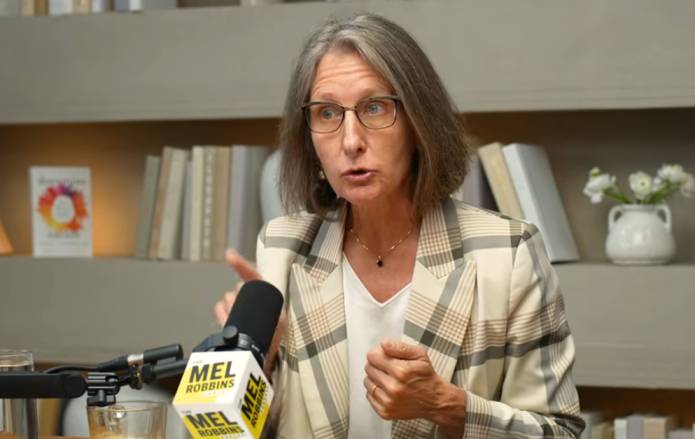
Editor’s Note: Mel Robbins sits down with Stanford University’s Dr. Anna Lembke, a world-renowned expert on dopamine and addiction, to explore why modern life has left so many of us feeling unmotivated and stuck in a cycle of compulsive overconsumption. The discussion dives deep into the “pleasure-pain balance,” explaining how our brains respond to instantaneous hits of dopamine from phones and ultra-processed food by driving us into a chronic deficit state that makes everyday tasks feel like “Mount Everest.” Dr. Lembke outlines her actionable protocol for resetting the brain’s reward system, including the transformative benefits of “dopamine fasting” and the counterintuitive power of leaning into intentional discomfort to build lasting willpower. This insightful conversation offers an essential roadmap for anyone looking to reclaim their focus and rediscover genuine joy in an increasingly distracted world. (Jan 22, 2026)
TRANSCRIPT:
MEL ROBBINS: Please help me welcome Dr. Anna Lembke to the Mel Robbins Podcast.
DR. ANNA LEMBKE: Thank you for inviting me. I’m absolutely delighted to be here.
MEL ROBBINS: Dr. Lembke, could you tell me if I take everything to heart that you’re about to teach me today, and I truly apply all this research about dopamine and motivation and happiness and pain and pleasure centers, and I apply it to my life, how could my life change?
DR. ANNA LEMBKE: If you’re like me, and you’re like many of my patients, you are probably unconsciously organizing your entire life around reward and little dopamine hits. From the moment we wake up in the morning, we reach for our phones, we scroll, we go get our coffee with our caffeine. We get in the car, we’re listening to our music. It’s not interesting, we’re flipping the stations.
Then we get to work, and all of a sudden we have to let go of those instantaneous pleasures. Now we’re bored, we’re frustrated, we’re restless, we’re anxious, we can’t concentrate. So then we’re interrupting ourselves and saying, “Oh, I better check my phone, or maybe I should look at that video.” And we’re doing that through the entirety of the day until we get to the end of the day where we go home.
We can’t wait till we get there to have a glass of wine, watch our shows, eat a cupcake, and then have difficulty falling asleep at night because we’re so wound up and restless. So what I’m saying to you is that I hope by the end of the conversation, you can get out of the vortex of compulsive overconsumption and get to a place where you’re not constantly seeking these rewards, but instead really showing up for your life.
MEL ROBBINS: Oh, my God. Dr. Lembke, this is why I’ve been so excited to talk to you, because you just explained every single one of us, and we’re in it. And so we don’t see how the constant distraction and reaching for all these things and everything you just described.
So what I got already so far is that a lot of your work centers around the fact that as a human being, we have this kind of natural system inside us that we will move, right, like a freight train towards what feels really good, but we reflexively move away from anything that might feel hard. Is that kind of what you’re talking about?
DR. ANNA LEMBKE: Yes. Very nicely summarized.
Understanding Dopamine: The Brain’s Reward Chemical
MEL ROBBINS: Okay. And your research in particular focuses on dopamine. So let’s just start at the basics. What exactly is dopamine, and why is it important?
DR. ANNA LEMBKE: Okay, so dopamine is a chemical that we make in our brain. It’s what’s called a neurotransmitter. Neurotransmitters are the molecules that bridge the gap between neurons. Neurons are these long, spindly cells that conduct electrical circuits. Our brains are fundamentally a bunch of wires. But those wires, the neurons don’t actually touch end to end. There’s a little space between them. So that space is called the synapse.
MEL ROBBINS: Okay.
DR. ANNA LEMBKE: And neurotransmitters bridge that gap between neurons to allow for fine-tuned control of those electrical circuits. Dopamine has many different functions, but one of its most important functions is in pleasure, reward, and motivation.
Now, it’s not the only neurotransmitter involved in that process, but it has become a kind of common currency for neuroscientists to measure the reinforcing potential of different substances and behaviors. Fundamentally, the more dopamine that is released in the brain’s reward pathway, and the faster that it’s released, the more likely is that substance to be reinforcing or something that our brain recognizes as important for survival. Something to approach, explore, and potentially exploit by doing it again and again.
MEL ROBBINS: So let me just give this back to you to see if I’m understanding this. Your brain releases these chemicals. Dopamine is one of them. And dopamine is related to motivation and pleasure.
DR. ANNA LEMBKE: Yes. A more fundamental way to talk about it is it’s related to reinforcement. So something that I do that’s often associated with pleasure, but not exclusively associated with pleasure, which then I want to do again and again because my brain recognizes it as potentially important for survival.
MEL ROBBINS: How important is dopamine in terms of the role that it plays when you are trying to either break and replace bad habits or create new positive habits? You see what I mean?
I can understand what you’re talking about, because the thing I immediately thought of is whenever I’ve heard anybody talk about something like heroin or oxycontin or something like that, that first time that somebody sadly uses it, there’s this boom, huge reward. And then experts are very clear that the reward or the spike that you’re getting declines with every use. But the poor person who is addicted is chasing that initial first spike and that feeling, even though it’s not coming.
DR. ANNA LEMBKE: Exactly.
The Pleasure-Pain Balance: Your Brain’s Seesaw
MEL ROBBINS: Oh, okay, wait a minute. So I think that that leads us to something I saw that you covered very early in your work, which is there is this pleasure-pain system that you were born with. It is in your body. And there’s something that you write about called the pleasure-pain balance. Can you explain that a little bit?
DR. ANNA LEMBKE: Yes. So this is an extended metaphor that I use to try to explain at a very fundamental level how we process pleasure and pain. And to me, one of the really interesting findings in neuroscience is that pain and pleasure are actually co-located in the brain. So the same parts of the brain that process pleasure also process pain, and they work through what’s called an opponent process mechanism.
MEL ROBBINS: Okay.
DR. ANNA LEMBKE: Okay. So imagine that deep in your reward pathway, there is a scale or a balance, something like a teeter-totter.
MEL ROBBINS: Oh, like a seesaw.
DR. ANNA LEMBKE: Like a seesaw, yeah.
MEL ROBBINS: Okay.
DR. ANNA LEMBKE: And when it’s at rest, that balance or that beam on the central fulcrum is level with the ground. When we experience pleasure, it tips one way, and pain, it tips the other. Now, again, this is a vast oversimplification, because, of course, we can experience pleasure and pain simultaneously, for example, when we eat spicy food. And the brain is just much, much more complex than this pleasure-pain balance.
MEL ROBBINS: Okay.
DR. ANNA LEMBKE: But it’s a useful framework for conceptualizing some fundamental concepts in neuroscience, like the concept of homeostasis and the concept of neuroadaptation, which I’m going to explain now.
MEL ROBBINS: Okay.
DR. ANNA LEMBKE: Okay. So let’s say I do something pleasurable. We talked about potato chips. I also really like potato chips. I eat a potato chip that gives me pleasure. My pleasure-pain balance tilts to the side of pleasure. But there are certain rules governing this balance. And the first and most important rule is that the balance wants to remain level with the ground. This is what neuroscientists call homeostasis. Right. It’s a range of baseline conditions that the organism must maintain in order to survive.
So as soon as I’ve eaten that potato chip and my pleasure-pain balance has tilted to the side of pleasure, I like how you tilt your head when I say that.
MEL ROBBINS: Like a dog. Is she going to give me a treat?
DR. ANNA LEMBKE: Right. My brain is going to react by working very hard to bring that balance level again. And that process is called neuroadaptation. And I like to imagine that as these little neuroadaptation gremlins hopping on the pain side of the balance, because that’s the level at which I understand it.
But the thing about those gremlins is that they don’t get off as soon as I’m level. I wish they did, but they stay on until the balance is tilted an equal and opposite amount to the side of pain. That’s the comedown. The craving, the hangover, or just that moment of wanting to have one more potato chip, drink one more glass of wine, watch one more TikTok video.
MEL ROBBINS: Oh, wait, hold on a second. Okay, I think I might have gotten this, but let me see. So takeaway number one, as I was listening, is that you are designed with this pleasure-pain balance. And we’re imagining a seesaw in life between the things that are easy that you love, pleasurable, the things that are very hard that you need to do that you avoid, pain. Right.
But your brain is not only able to tilt toward pleasure or tilt toward pain so you can experience it, but it’s always going to want to get itself back to that seesaw being level. But you also said another word, craving. Is craving part of this pain thing, which then tries to get you to get more pleasure? Is that where does craving come into this?
DR. ANNA LEMBKE: Yeah, yeah, you’re definitely on the right track.
MEL ROBBINS: So am I in the general area absorbing this?
DR. ANNA LEMBKE: You are. You are definitely absorbing this. So the first rule is any deviation from homeostasis is essentially a biological stressor, and our brain will want to do the work to get us back to homeostasis. Okay.
MEL ROBBINS: Yep.
How Repeated Pleasure Creates Pain
DR. ANNA LEMBKE: And there are a couple ways we can get back there. We can just wait till the gremlins hop off and homeostasis is restored. That is not have more potato chips, or we can have more potato chips because that will get us back there faster. And of course, potato chips are yummy. So that’s what I want to do.
But this brings us to the second rule of the balance. And the second rule of the balance is, with repeated exposure to the same or similar reinforcing stimulus, that initial deflection to the side of pleasure gets weaker and shorter in duration, but that after-response to pain gets stronger and longer. In other words, those gremlins start to multiply. They’re now lifting weights. We’ve got Arnold Schwarzenegger gremlins. Right.
So this sense of, “I’m doing something pleasurable for me right now,” yes, that’s true, because it brings us back to the level position. But in the long run, what it does is it drives us down to the side of pain. And this is really key for understanding what happens in the brain as we become addicted.
Because if we continue to consume our drug of choice over days to weeks, to months, to years, we then have enough gremlins on the pain side of the balance to fill this whole room. And eventually they are camped out there, tents and barbecues in tow. And then we’ve changed our hedonic or joy set point.
Right now we need more of our drug in more potent forms, more potato chips, not to feel good, but just to level the balance and feel normal. And when we’re not using, we’re walking around with a pleasure-pain balance tilted to the side of pain, experiencing the universal symptoms of withdrawal from any addictive substance or behavior, which are anxiety, irritability, insomnia, depression, and craving.
And this is why it is so difficult to stop eating potato chips or whatever it is once we’ve changed our brain and gotten into a habitual pattern of exposure to our drug of choice or our reinforcing behavior over a long period of time.
The Spectrum of Addiction: From Phones to Food
MEL ROBBINS: And you use the word addiction, but you mean that in the broadest of all possible terms. So for my benefit and for the person who’s listening benefit, give me a range of things that people could become addicted to and not realize that it’s because of this pleasure-pain balance getting out of whack and then getting into a pain deficit where you’re anxious and depressed and craving and all of these things that you just described that a lot of people feel but may not realize.
DR. ANNA LEMBKE: Great question. So first of all, let’s define addiction.
MEL ROBBINS: Okay.
DR. ANNA LEMBKE: Okay. It is a brain disease, but we don’t have a brain scan or a blood test to diagnose it. We base it on patterns of behavior. It is the continued compulsive use of a substance or a behavior despite harm to self and or others.
You could have a range of addictions to mild, moderate and severe. And you could have pre-addicted states, right, where you haven’t quite yet crossed over into addiction. But now you’ve got a compulsive habitual behavior where you’ve lost some agency, but not all agency. And you know it’s not good for you. You have regret about doing it, you have some difficulty stopping, but if you really set your mind to it, you can. Okay, so let’s just frame that as kind of what we’re talking about. It’s really a spectrum or a continuum.
MEL ROBBINS: What immediately came to mind for me is just constantly being on your phone.
DR. ANNA LEMBKE: Yes.
MEL ROBBINS: And this sense of I wish I weren’t on my phone enough or as much. And that feeling that every one of us has after you blow through two hours, mindlessly scrolling.
DR. ANNA LEMBKE: Yes.
MEL ROBBINS: And wishing that you hadn’t. So is that an example of what you’re talking about in this range?
The Neuroscience of Digital Addiction
DR. ANNA LEMBKE: Is a great example. And digital media, social media, short form videos activate the same reward pathway as drugs and alcohol. They’re highly reinforcing. We do see in clinical care people who are getting addicted to many different forms of digital media. And just looking around, you can see that people are overly engaged with their phones.
Now maybe they’re not meeting threshold criteria for a clinical addiction, but it’s getting in the way in many instances with their goals and even their values. So that initial exposure to whatever our drug of choice is, and we’re all wired a little differently. So for one person it might be potato chips, for another, cigarettes, for another, short form video on their phone that is reinforcing.
Rewarding releases dopamine in the reward pathway, at least initially and eventually when we become addicted or we’re in this compulsive overconsumptive loop. Now I’m using not to actually solve the initial problem or even to have fun, but because I’m trying to get back to homeostasis.
And the reason this is important is because in the immediate aftermath of using our drug of choice, it typically feels good because it’s moving our pleasure pain balance back to homeostasis. But the long term effect is to actually drive our balance more to the side of pain. And that is a fundamental key concept that the more we use our drug of choice, the more we go into this pleasure pain balance that is tilted to the side of pain, where whenever then we’re not using, we lose our ability to take joy in other more modest rewards.
We’re in the vortex of compulsive over consumption and craving. We’ve narrowed our focus to just wanting to get to where we can use our drug of choice again to bring it balance to that homeostatic position.
MEL ROBBINS: And also behavior of choice. So what are a wide range of things that might surprise the person who’s listening or give them this wake up call, an epiphany about what they’re actually dealing with. What are the types of things that people can find themselves addicted to?
The Surprising Range of Modern Addictions
DR. ANNA LEMBKE: So in clinical care we see a very broad range. People get addicted to the traditional drugs and alcohol, whether legal or illegal. People can get addicted to prescription drugs, they can get addicted to over the counter drugs, right? So taking them for a medical reason, but then over time finding that their brain has adapted to that and wants more and more.
People can get addicted to all kinds of behaviors. Gambling, sex, all kinds of digital media, social media, video games, online pornography, online shopping. People can get addicted to other people, love and other forms of attachment.
MEL ROBBINS: Really?
DR. ANNA LEMBKE: Yes, yes.
MEL ROBBINS: You just said something that caught my attention. I’m sure it caught yours. As you’re listening, watching, what are the things that turn something or someone else into a drug for you?
The Three Risk Factors for Addiction
DR. ANNA LEMBKE: Right, so three general categories. The first is simple access. Simple access to our drug of choice. It’s one of the biggest risk factors. If you live in a neighborhood where drugs are sold on the street corner, you’re more likely to use them and more likely to get addicted to them.
Now, there is genetic variation between individuals for susceptibility to addiction, and that plays a role. But whoever you are, if you have more access to whatever your drug of choice is, you’re more likely to use it, more likely to get addicted. And what we have in the world today is so many more drugs, and the old drugs are so much more potent than they used to be. And everybody has more access to a much larger quantity.
Two is potency. So how much dopamine is released and how quickly it is released has a huge impact on how addictive that substance or behavior. And what we have with digital devices is technological affordances or dynamic design features that make them more potent things as simple as short form video. Short form video is highly reinforcing for our brains. It’s just, we love it. These moving images, the colors, the sounds, often integrated with story and narrative.
But what’s really key here is the interactive aspect of it. So the way in which my engagement with the device and the medium actually changes the medium. And this is where the algorithmic feed is so key, because the algorithms are designed to learn what we’ve liked before and continue to give us what we’ve liked with just a little bit of novelty.
So the longer I spend on the platform, the more I change the platform to be tailored for me. And that tailoring really contributes to its addictive potential because again, it’s narrowing that drug of choice down to exactly the types of videos that I like to watch or whatever that engagement is. Plus, we have the likes and the followers and the shares and the comments.
Again, it’s this sense, what is sometimes called in neuroscience the sense of grip, or more colloquial, the sense of control. What is so key to addiction and what so many people don’t appreciate is that addiction at heart is really not about escape, it’s really about control. It’s about trying to create a world within a world.
Especially if my world is really chaotic, in which I have this fine tuned control of my perception and action loops such that I can manage and change my experience with my input. Does that make sense?
MEL ROBBINS: It does. And what I really related to is grip. Because if you’ve ever struggled with a type of behavior where you feel like you’re in a loop, like why do I keep obsessively checking where this person’s location is, that has a grip on you.
DR. ANNA LEMBKE: Yes.
MEL ROBBINS: And if you have had a super chaotic day at work and you know that what you should probably do is go home and cook a nice meal and read a book and go to bed early and take a bath and all those things, but instead you flop down on the couch and you waste four hours on your phone while the TV is playing, doing absolutely nothing. It has this grip on you, but you have this sense of being in control, perhaps for the first time, that moment. And so it’s pleasurable in that regard.
But so I completely get what you’re talking about. So you said simple access potency in terms of how much dopamine gets released. What’s the third thing?
DR. ANNA LEMBKE: Okay, so this is what I find so paradoxical in a way is that the third thing is the uncertainty or the mystery. So at the same time that we want to experience grip, right, or we want to experience this sense of fine tuned control where I can do this action and change the way I feel. If that’s all there was, we would get bored.
But built into the algorithm is this novelty or this mystery where we are intentionally fed the occasional video that’s not something that we’ve watched before, but that’s something that, oh, I never thought I would be interested in this. We are wired for uncertainty. We’re wired for friction and for challenge. Again, because that is what has kept us alive in a world of uncertainty.
We live in a world of certainty that in many ways is incredibly boring. Because there aren’t these challenges for us to resolve beyond what we make up for ourselves. That’s where this third piece comes in, where we crave that uncertainty. And again, there’s enormous uncertainty still in our lives. But what we want is the controlled digital uncertainty where we have this very short perception, action loop of resolving it. Kind of the drugified uncertainty.
ADHD and Dopamine Deficiency
MEL ROBBINS: Can you talk a little bit about dopamine and ADHD?
DR. ANNA LEMBKE: Yeah. So we do know that people with ADHD are at higher risk for developing addiction. And the mechanism is not well understood. But there are some interesting studies suggesting that people with ADHD might have baseline lower levels of dopamine transmission in the reward pathway.
MEL ROBBINS: Meaning they don’t make a lot of it or they don’t have enough firing through in the system or?
DR. ANNA LEMBKE: Yeah. So these are brain imaging studies where you measure dopamine transmission in the nucleus accumbens in healthy control subjects. You compare that to people with ADHD and you find and lo and behold, in that reward pathway, people with ADHD appear to have lower baseline levels just at rest of dopamine transmission and even fewer postsynaptic dopamine receptors, which is again related to dopamine transmission.
MEL ROBBINS: If you had that, would that mean you would be more impulsive at going after pleasurable things and quick hits of distraction and dopamine and all that stuff?
DR. ANNA LEMBKE: Yeah, because remember, that’s what we see in addiction. So the pathophysiology of addiction is this down regulation of dopamine transmission in the reward pathway. So folks with ADHD might at baseline have some reward insensitivity which might contribute to their impulsivity, their stimulus seeking, their vulnerability to over consume intoxicants, their vulnerability to addiction.
Anxiety, Reassurance-Seeking, and Emotional Addiction
MEL ROBBINS: You know, one other thing that I see a really big connection to is anxiety and dopamine. And I’ll share this because I think it might be helpful. One of the things that my daughter and I are working on right now, because we definitely have a relationship where I’m like her blankie and she has no problem with me talking about this. And it’s something that I noticed that I have struggled with in relationships too, which is whenever life gets stressful or whenever I get flooded with emotion, whether I feel a little homesick or I nervous about what’s about to happen, or I just am on edge, or I wake up feeling sick, that there is almost this reflexive need to quickly reach out and touch base and quickly reach out and get assurance from somebody else.
And I have, as I’ve gotten older, really noticed this propensity, whether it was with my husband or with my business partner, and taught myself to just ask, wait, am I reaching out because I want to connect or am I reaching out because I myself am feeling something that’s difficult and uncomfortable? And instead of just standing in this moment and holding myself here and going, okay, I can get through this, it’s okay, this emotion’s going to pass. I’m capable of handling this difficult thing I’m about to do. I’m capable of feeling these emotions.
I would reach out and borrow the confidence or whatever from somebody else. And it’s like a simple quick hit that immediately resolves the anxiety you’re feeling. And now my daughter is working on this with me, that anytime she feels this flood and it’s painful when you feel that. And obviously every expert out there says when you’re anxious, the worst thing you can do is avoid the painful thing.
But seeking reassurance, I just realized, is pleasurable. And that’s why the anxiety gets worse. That’s why you start to become addicted in those moments, oh, got to reach out to mom. Got to check in with mom. Got to make sure my spot like that. That is part of this mechanism of pain, pleasure, dopamine, and not forcing yourself to do the small, uncomfortable things. Can you explain a little bit what are your, because I see you nodding.
DR. ANNA LEMBKE: Oh, yeah, I absolutely love this. And this is why I think we’re sisters from another mother. Because that’s essentially my drug of choice is attachment. Let me start by saying it is wonderful to have emotional intimacy and people in your life you can reach to an interdependency and that we need each other and love each other and want to reach out to each other. So that’s obviously the wonderful starting point.
But what you’re getting at is really, really important. And it’s that moment that we cross from sort of mutual love and respect to, I’m actually using you as a drug, essentially. I’m using you to help me modulate my emotions, which, again, in and of itself is not necessarily bad because everyone’s, well, of course, yeah.
MEL ROBBINS: But when it becomes the baseline. And for me, what I started asking myself is, wait, am I reaching out because I want to connect with this person, or am I reaching out as a drug? Yeah, yeah. Like, I’d grab a glass of wine.
The Destructive Nature of Modern Technology
DR. ANNA LEMBKE: Yes. And here’s where the technology has become so destructive and insidious. You know, even just 20 years ago, if you wanted to reach out to your daughter living across town, I mean, essentially you had to go over there, right. And it took a little bit of time and it took some effort.
Now with the devices, this reaching out really has become drugified. You know, whether it’s—and I do this too. You know, we’re newly empty nesters, and it’s been very difficult for me to be at home without any kids there now. And, you know, I kind of got to a point where I was literally stalking my kids on Find my iPhone. And I’d be like—my daughter was doing an internship in D.C. and I’m like, “Are you at a Goodwill in D.C.?” She goes, “Mom, that’s weird. I don’t want you to use Find my iPhone with me if you’re going to be stalking me.”
And it’s been—this is a real area I’m working on because my kids occupy a lot of my mental real estate. Right. And their well being. I do use it as a drug to make myself feel better. And when they’re doing well and I get little information from them that they’re doing well, I feel good. And when they’re not doing well, I ruminate and I worry and I feel bad.
But here’s how this is so counterproductive and potentially harmful for me and my kids: my kids then get trapped in this thing where we can’t actually tell mom that things are not going well because we have to be doing well for her to be okay.
MEL ROBBINS: And it’s very subtle, but this creeps up on you. I’m so glad you’re talking about this. We’re the same age.
DR. ANNA LEMBKE: Yeah. Yeah, we are. Exactly.
MEL ROBBINS: We’ve gone through the empty nester thing. But I think regardless of your age, if you’re in your teens or your 20s or your 30s, you can probably think of moments where you have been going through something uncomfortable and you are now trying to make yourself feel okay by using another person.
DR. ANNA LEMBKE: Yes.
MEL ROBBINS: I invite you. If there’s a person whose location you check all the time, or there is a person who you notice, you only reach out to them when you’re feeling a little distressed or bored or whatever. Just take everything that Dr. Lembke has shared and try to, for the next couple weeks, not text or reach out to that person when you’re feeling a moment of distress and try to reassure yourself through it and just notice what starts to open up. And I think it’s a little dopamine reset.
DR. ANNA LEMBKE: Yes. Yes. I think you’re right.
MEL ROBBINS: Homeostasis sets back in.
DR. ANNA LEMBKE: That’s right. That’s right.
Dr. Lembke’s Personal Story of Addiction
MEL ROBBINS: It’s so cool. One of the things I really love about your work and your research and the way you explain this stuff, Dr. Lembke, is that you are very open with your own story. And I love that here you are researching all this stuff, you are teaching it, you’re simplifying it for your patients, and all of a sudden, you have this epiphany. Oh, my gosh. I myself have become addicted to something. Would you share that story?
DR. ANNA LEMBKE: Yes, absolutely. So, okay, where to go into this? So in my early 40s, you know, life was basically running along pretty well. And it’s not like I was trying to escape into anything. I mean, I had some marital conflict around whether or not we were going to try to have more children or stop there. But—and I’ve always been a reader, so I’ve always enjoyed reading as a pleasure, an escape as well.
And I was hanging out with some moms at the elementary school and they were talking about this book that they had read and how great it was. So I was like, “Oh, well, what are you reading?” And they said, “Oh, it’s the Twilight Saga.” And I thought, “Huh, okay, that sounds—you know, I’ve never read a book like that. I’ll go check it out.”
So I go to the bookstore and I’m looking for it in the adult section. They’re like, “No, no, you got to go find it in the kids.” I’m like, “Okay, the adolescent section.” You know, so it’s—for those who don’t know, it’s a vampire romance series written for teenagers.
So anyway, I can’t really explain it other than just saying I found it completely transporting. And I read the whole series and then I went back and read it again and again and again. And it just put me in this place that was just—I don’t know, I just didn’t have to think about myself. I didn’t have to think about my life. It was like a trance-like state, a very, very pleasurable, more so than books I had been reading at the time.
So then I thought to myself, “Well, maybe there are other vampire romance novels.” So I go to my local library and lo and behold, there’s like a whole shelf of them. I mean, I know it’s kind of weird that I didn’t really discover the romance genre until late in life, but I really hadn’t. So then I’m like, “Oh, cool.” So I’m reading, you know, I’m reading Anne Rice. I’m reading all the romance novels that have to do with vampires. And then I’m like, “Okay, what now?” And then it was werewolves and necromancers and soothsayers and fairies and—
And as time went on, you know, I just was spending more and more time reading romance novels, especially Romantasy, combining fantasy and romance. Then my friend Susan, you know, she’s like, “Anna, you should get a Kindle.” And I’m like, “Oh.” You know, and this is sort of early. The e-readers were early. So I’m like, “Okay.” And I get a Kindle. And then all of a sudden, I can be reading bodice rippers with these really embarrassing covers, but nobody knows. I’m like, “Oh, yeah, I’m reading War and Peace. Isn’t that amazing?”
You know, and the crazy part is, even as an addiction psychiatrist, I did not see the progression as it was happening. And there were a couple of things with the progression. Number one, I started developing tolerance where I didn’t notice it only in retrospect, but I needed more and more graphic forms to get the same effect. So more sexualized, more eroticized.
I was spending more and more time reading. So staying up later and later at night, being tired the next day. I was becoming mentally preoccupied where that’s all I wanted to do. I just wanted to get through my day, deal with the kids, deal with my husband, and then get to my place where I could read my romance novels, right? So this kind of narrowing of focus which we see with addiction.
And then there were also real consequences. And the main consequences were I was less present for my children and my family and my patients. I started bringing romance novels to work and actually reading them in the 10 minutes between patients instead of reflecting on patients or documenting my patients.
We went on a family vacation at the beach. I didn’t go to the beach. I spent the whole time in the room reading romance novels. We even went to a neighborhood party. And this is so bizarre. I actually found a room in their house while other people were in the backyard. And I read romance novels during the party.
So it was, again, this kind of narrowing of focus, the inability to take joy in other modest rewards. This resetting of my joy set point. The only thing that gave me pleasure was the romance novels. And eventually I got to a point where I didn’t care about the writing or the plot structure or the characters. I was on Amazon trying to get free—because, you know, free drugs, that sounds good to me. I didn’t want to pay more money, so I got free romance novels.
I didn’t even finish them. After a while, I just got to three quarters of the way through, which any romance novel is designed—if you open it to three quarters of the way through, you’ll get right to the climax. Yeah. You know what I mean? That in multiple ways. And I didn’t even finish it then.
I was—and it was really only in retrospect that I could see in myself what my patients had been describing, where it was like, “Oh, I’ll never use heroin.” And then all of a sudden, they’re in the Tenderloin, selling their jacket and their laptop for a tiny amount of black tar heroin. You know, this kind of lowest common denominator. Anything to get my fix. Now, I don’t want to trivialize—
MEL ROBBINS: There was a moment where you were like, “Holy cow. The pleasure, pain—”
DR. ANNA LEMBKE: Like, it’s—
MEL ROBBINS: I am gone off the rail. Is there a moment where you’re like, “Holy cow?” Because what you’re describing, honestly sounds like everybody’s basic use of their phone.
DR. ANNA LEMBKE: Yeah.
MEL ROBBINS: The conflict, the grip, the—this that it’s not as satisfying. Why am I doing it? I’m searching for more, maybe follow different things. And so I love this story. I also love this story. I’m going to tell you a reason, because I found the whole genre of adult fairy fantasy, Court of Thorns and Roses, graphic audio.
I would be in my kitchen listening to this. Chris would be standing there, the volume would be down. I’m in the night court listening to my characters in a completely different world. I can hear him talking and I’m kind of nodding as if I’m there. And I’m like, “Mel, you have to—”
And the other thing that happened is after I finished the entire series, which I got my whole family and half this company to listen to, I had been looking for something that holds my—
DR. ANNA LEMBKE: Attention and haven’t found it.
MEL ROBBINS: And so when you have—can you use that to explain just the cycle of pleasure, pain, and how dopamine is involved, just like in the beginning. So the first one, you’re like, “Oh, my God.”
DR. ANNA LEMBKE: Right?
MEL ROBBINS: So it’s novel. Dopamine gets released because of why?
Understanding the Dopamine Cycle
DR. ANNA LEMBKE: Again, dopamine is our reward neurotransmitter. It is what signals to us that something in the environment is important for our survival. We should approach it, explore it, and potentially exploit it. Dopamine evolves to bring us to the natural rewards that we need to live. Food, clothing, shelter, finding a mate.
What happens in addiction is that that dopamine signal and the reward pathway gets hijacked by this drug that resembles a natural reward and works through that similar mechanism, but is not, in fact, a natural reward and is actually adverse or contrary to our well being. But we no longer recognize it as such, in part because over time, our brain adapts to that increased dopamine firing.
Eventually, we end up in this chronic dopamine deficit state. And now we’re needing to use not to get pleasure, but actually just to bring ourselves back up to baseline and stop feeling pain. But we don’t see that. Right, we don’t see that.
MEL ROBBINS: Okay, so let me see if I can give this back to you. So the fact that you keep looking for another novel, the fact that you keep going back to the novel, that’s a sign that you’re in a dopamine deficit state because you’re chasing something like that.
DR. ANNA LEMBKE: But even more importantly, that you lose some agency around your use. And that even when you or others recognize it’s problematic, you have trouble stopping. And when you’re not using, you experience a lot of craving to use and a compulsion driven by that craving to want to do it again, even when you committed to not doing it.
MEL ROBBINS: Got it. Okay. You’ve said that in today’s world, every single one of us is vulnerable to addiction, even if we don’t realize it. Can you explain what you mean by that?
We’ve Drugified Everything
DR. ANNA LEMBKE: Yeah. So we talked about these technological affordances that make digital media more addictive. And, you know, kind of the big idea in Dopamine Nation is that we’ve essentially drugified everything, whether it’s substances or behaviors or work or relationships, we’ve made it more accessible, more potent, you know, more novel, such that now we’re vulnerable to get addicted to just about anything, including things that we typically think of as healthy.
MEL ROBBINS: Like what?
DR. ANNA LEMBKE: Like reading. Right now we’re like, “Oh, great, my kid’s reading a book. That’s awesome.” But I can tell you, I and many of my patients have gotten addicted to various forms of reading, but also things like human connection, as we talked about. Right? Like this—super healthy. We need each other. We need human connection.
But now we have these devices that are so reinforcing because of their dynamic design features that they create the illusion of connection even when there’s no real connection happening. And more importantly, they hijack our reward system so that we don’t want to disengage even when we’ve exhausted their utility. Right. So these digital media are great when we use them as a tool, not great when we use them as a drug to change the way we feel.
MEL ROBBINS: Why is it so damn hard to do the simplest things like going to the gym, eating healthy, or just getting started on that project or on studying. You know, you need to do it, but you can’t seem to get the get up and go to do it.
DR. ANNA LEMBKE: But we evolved to reflexively approach pleasure and avoid pain.
MEL ROBBINS: Gotcha.
DR. ANNA LEMBKE: In a world of scarcity, where we would have to do a lot of upfront work for a tiny little bit of reward.
MEL ROBBINS: Got it. So we are designed to move toward what’s easy now, towards what’s pleasurable now. And we are designed to move away from the gym or away from the project that we don’t want to do.
DR. ANNA LEMBKE: Yes. And again, that is a great built-in mechanism to keep us alive in a world of scarcity. But in this world of overwhelming overabundance, it’s a very bad mechanism because now we’re exposing our brains to this fire hose of dopamine. We’re getting into this dopamine deficit state. Now we’ve narrowed our focus. All we want to do is keep pursuing pleasure to bring ourselves back up to baseline.
And the prospect of getting up off the couch and actually going out the door, much less going to the gym, has become kind of a Mount Everest for us. Right? Because we’ve reset our hedonic or joy set point. Plus we are embedded in a culture that tells us that pain is dangerous, that if we’re uncomfortable, then we’re potentially creating a psychic scar that’s going to set us up for future pain in the form of post-traumatic stress disorder.
That what we need is to pursue comfort, to be happy, to be relaxed, that any kind of distress is actually going to harm our brains. And in fact the opposite is true, that when an organism is exposed to right-sized pain, that actually triggers our body’s own regulating healing mechanisms and we start to upregulate our feel-good neurotransmitters like dopamine, like serotonin, like our endogenous opioids, like our endogenous cannabinoids.
So we get our dopamine indirectly by paying for it up front, which is the way that we evolved to get it again. We evolved to have to do work to get a little bit of reward. So the message here is to be happier, to experience more joy, we need to do the counterintuitive thing of moderating and greatly reducing our use of instantaneous, easy pleasures and intentionally leaning into right-sized pain in order to reset our pleasure-pain balance.
The Need for Daily Moments of Pain
MEL ROBBINS: That makes so much sense. The way that a human being is designed is we need moments of pain all day long. And what you’re talking about is shoving yourself out of bed, you’re talking about getting out the door for a walk, you’re talking about how painful it can be to just get yourself out of that lull, turn off the TV, stand up and go fold the laundry.
You’re talking about picking up the phone and having the hard conversation. You’re talking about working on your resume or taking that AI skills class instead of scrolling on your phone. And the problem is that we need to be able to push ourselves through moments of pain all day long. Because that’s how we were designed to work.
And modern life and the way it is so easy and so convenient and we’ve optimized for—you can order your food, you don’t even have to cook anything or think about it. Oh, you can sit on the couch and somebody will bring it. You don’t even have to—you can listen to 15 different radio stations on the way to work if you get bored. So you don’t even tolerate boredom, which I would imagine would be just one of these small moments of pain.
It’s not any fun to be bored, but we reach for our phone. And so we’ve so completely whacked ourselves from the inside out because we’re constantly now reaching for pleasure.
DR. ANNA LEMBKE: We are so used now to constantly being stimulated. Right? That simply sitting in the quiet is terrifying for us. It’s absolutely terrifying because we’re always reacting to external stimuli. We’re not comfortable with our own thoughts.
You know, when we disconnect for a period of time, we have this flooding of these thoughts and emotions that we’ve been putting at bay by distracting ourselves with all these pleasurable stimuli. And it can be really scary. That is painful. But the longer we can sit and just kind of be curious about what comes up for us, and this is where mindfulness practices are so important, and even welcome that discomfort, but also name it and recognize it.
So, you know, not even just so much pushing through discomfort, but just going, “Okay, I’m uncomfortable now and that’s okay.” And I can sit with this and just be curious about it and it too will pass. And I will get to a place where I have actually then built up mental calluses to tolerate more discomfort. And this is of course the sort of underpinning of exposure therapy that I think so many people are finding helpful.
How Cheap Dopamine Destroys Long-Term Motivation
MEL ROBBINS: One thing I want to ask before we talk about what the hell do we do, Dr. Lembke, is how does over-rewarding yourself with these small, little cheap dopamine pleasure—easy, easy, easy, do the easy thing—how does that mess up our motivation in the long term?
DR. ANNA LEMBKE: It messes up our motivation because we become narrowly focused on short-term rewards and we lose the ability to see the longer-term rewards that require the upfront work that are actually better for our well-being over months to years.
MEL ROBBINS: So does the pain also feel bigger? So if you have constant pleasure, easy distraction around—I’ll just do the easy thing, I’ll just order the Uber Eats, I’ll just do this, I’ll just do that—does it feel harder over the long run to get off the couch or to go for that walk?
DR. ANNA LEMBKE: Absolutely. And again, by changing our hedonic or joy set point, what it means is that we need bigger pleasures to feel any pleasure at all. And even the merest pain is incredibly painful.
And we see this now in clinical care where people talk about really quite ordinary things that they struggle to do. You know, simply paying a bill or getting off the couch and going and meeting with people or doing the dishes. Now, these are kind of everyday things that nobody really likes or generally we don’t like, but they’re even more painful than in prior generations.
MEL ROBBINS: Well, you know, one example that I can point to to kind of broaden this out to a normal person who’s just really struggling with motivation.
DR. ANNA LEMBKE: Yeah.
MEL ROBBINS: You know, doesn’t think, “Well, I’m not really addicted to anything,” but has really leaned in to say, “But I’ve really screwed up the pain-pleasure—”
DR. ANNA LEMBKE: Yes.
MEL ROBBINS: Balance in my body. I am finding it harder and harder to concentrate or to do the little hard things or to be motivated to do the things that I needed to do. If you’ve ever had an experience or you have an experience as a parent where your kids go to like a school sleep-away camp, or they go on a field trip and they take their phones away and they are forced to tolerate that, they are so much happier.
And so it’s an example of how your body naturally resets to a homeostasis once the cheap dopamine thing is removed from your environment and from you. And that’s why I think we all need a dopamine detox and to really understand that if you’re struggling with motivation in any area of your life, if you’re struggling with doing anything difficult, if you’re struggling with enjoying aspects of your life, that this is a really serious place to take a look because this makes a lot of sense.
The Science Behind Dopamine Detox
DR. ANNA LEMBKE: Just add something in there. And key to this abstinence trial or this dopamine detox—and we’re not actually abstaining from dopamine because we’re not ingesting dopamine. It’s something that gets triggered in our brains, but it’s kind of a metaphor or a meme at this point.
The key to it, though, is to abstain for long enough to allow those gremlins to hop off the pain side of the balance and for homeostasis to be restored. Because if we don’t abstain for long enough, what happens is we take our pleasure, our reward, off of the pleasure side. The gremlins accumulating on the pain side crash us down and we are in withdrawal. Right?
And in that state of withdrawal, we experience anxiety, irritability, insomnia, dysphoria, and also intense craving that feels like it will never get better. But what is so amazing is that once we get over the hump of sort of that acute withdrawal for most people, which is about 14 days, we come out the other side.
MEL ROBBINS: Well, that’s for a hard drug. Or is that for everything? Could that be for like not checking a person’s location?
DR. ANNA LEMBKE: It could be, yes. In fact, you know, studies looking at teenagers who get off of social media find that they feel less depressed, less anxious, and less lonely, but only if they go for long enough, which is, on average, about three to four weeks of abstaining from social media.
So in my clinical experience, kind of no matter the drug and no matter the sort of severity of the attachment, if people can go for about three to four weeks, they generally, not always, but about 80% of folks feel better and experience less craving. But if they only go for two weeks or less, they do not typically get out of that vortex of craving.
And then they don’t also kind of believe in the experiment, right? Because they feel like, “Oh, it didn’t work for me.” It’s like, well, how long did you abstain? Because it really needs to be long enough, you know, again, for those metaphorical gremlins to hop off and for sort of baseline reward to be restored.
MEL ROBBINS: Well, it’s also helpful to say, to know that the craving is simply your body working through this pain-pleasure seesaw being out of whack.
DR. ANNA LEMBKE: And it’s time-limited.
MEL ROBBINS: And it’s time-limited, that it will pass. But it is a sign that everything’s functioning as it should be because you’re trying to get back to homeostasis. And if you’re feeling the craving, you’re actually doing it correctly.
DR. ANNA LEMBKE: That’s right, exactly. And you’re moving toward a good place. So it’s reframing the dopamine fast or the abstinence trial as not denying ourselves a reward, but actually doing something healthy, moving toward a better life.
Practical Applications of Dopamine Detox
MEL ROBBINS: So you could create a dopamine detox over a three to four week period over anything, whether it’s, “I’m not going to sleep next to my phone for four weeks.” And I’m going to wake up in the morning and I’m going to feel the craving to reach for it, and I’m not going to do it.
You could take on the standing in line challenge. Every time I’m standing in line for the next four weeks, I am not going to reach for my phone. I’m going to practice all the tolerance and the painful experience of feeling anxious, depressed, agitated, pissed off in that line. And if I feel those things, I’m doing this correctly because I’m getting myself back into homeostasis. Oh, I love this. This makes a lot of sense to me.
DR. ANNA LEMBKE: Yeah. Good, good.
The Power of Intentional Discomfort
MEL ROBBINS: Let’s talk about discomfort. How can intentional discomfort help us become happier and more motivated? And could you explain to the person listening, what does that look like?
DR. ANNA LEMBKE: Great. So getting back to dopamine fasting and the pleasure-pain balance, we’re encouraging people to abstain for a period of time, minimum four weeks from their drug of choice to allow those gremlins to slowly hop off. It takes time so that homeostasis can be restored.
But hypothetically, we can speed up that process by intentionally pressing on the pain side of the balance. So, for example, there are studies showing that people in withdrawal from alcohol and drug addiction, if they engage in vigorous exercise, they can decrease the symptoms of withdrawal, they can get to a place where they’re feeling more of a strong recovery, and they can actually prevent or decrease their risk of relapse just by engaging in exercise.
Why? Well, again, using this metaphor to sort of visualize what might be happening in the brain is that if we intentionally now press on the pain side of the balance, those gremlins, those metaphorical gremlins, will go to the pleasure side, and we can get our dopamine indirectly by paying for it up front.
And the classic example of this is the runner’s high. Right? So we know that exercise is actually injurious to cells. So at the cellular level, exercise is toxic. But we also know exercise is really good for us. So how does it work? What’s probably happening is that the body senses minor injury in response to exercise and then starts to upregulate again our own feel-good neurotransmitters, including dopamine.
MEL ROBBINS: Since we now understand that intentional pain throughout your day, doing hard things, pushing that lever inside yourself, forcing yourself to do these things, that it is so important for your happiness, it’s so important for your body to function correctly and your brain to function correctly.
And so I want you to take this on as Dr. Lembke describes this. What would it look like from the moment you wake up to the moment you go to bed to start to insert intentional discomfort for your own happiness and well-being? Let’s just take somebody who is really concerned about their overuse of the phone and technology, but they still have to go to work. And let’s just walk through the moment you wake up and what you could do with intentional discomfort to start to help yourself reset this.
DR. ANNA LEMBKE: Okay. The moment that you wake up actually begins with the night before.
MEL ROBBINS: Oh, okay.
DR. ANNA LEMBKE: Where you make a plan. Because if we find ourselves choosing between pleasure and pain, we will always choose pleasure. Unless we have anticipated that moment and put in self-binding strategies that put a barrier between ourselves and our drug of choice so that we can press the pause button between desire and consumption.
MEL ROBBINS: Got it. So you’re basically saying do not rely on willpower alone because you are wired to move toward the chief dopamine. And so if you truly want to do this, you’re going to make a plan the night before.
Planning Your Morning the Night Before
DR. ANNA LEMBKE: Yes. And that plan will include having no digital devices in the bedroom or within easy reach. It will include making a plan for starting your day with pain. Now that I know sounds—
MEL ROBBINS: Give me some examples.
DR. ANNA LEMBKE: First of all, just getting out of bed, okay. When you wake up, I mean, it can be hard to just get out of bed, right? And then if your schedule and your lifestyle allows doing some exercise or some mind-body work, some meditation, something that maybe you don’t necessarily look forward to before you do it, but you know that after you do it, you feel better.
MEL ROBBINS: Okay?
DR. ANNA LEMBKE: So you plan all that out. You put your exercise bag there, or you arrange to meet with a friend to exercise, or you put your, you know, whatever your meditation practice is, you get it all ready and you plan it out.
And then when you wake up, you don’t linger, you know, in the bed when you know especially you’re not going to go back to sleep. Don’t grab for any digital devices, don’t look at any screen. Your brain is going to tell you, “Oh, I need to check this” or “I’m just going to look at that” or “This is really important.” Really try to plan it out so you don’t need to look at your device for any reason. Not for a text, not for mapping. Like know where you’re going to go, plan it out in advance, get up, leave the device behind, go outside.
If you can move your body, you know, be in nature. If you can be in a space where you are not counting yourself or digitally monitoring yourself, you’re just with yourself or other people. But it’s not through this digital medium. When you’ve done that, that alone is awesome. If you do that, that’ll change your life. That right there and doing it with consistency but also coming back and then delaying the point at which you get on your device.
So whatever your, you know, one patient I had called it his “morning jamboree.” You know, whatever it is like making your bed, eating good breakfast, brushing teeth, cleaning up all of the things right before you actually get on the device.
And then before you get on the device, make a list of what you’re going to do on the device. Why? Because the instant our brains are exposed to those screens, all of a sudden we forget what we were going to do. We forget how we were going to use it as a tool and instead we use it as a drug.
So make a list, get on there. Hopefully the night before you’ve also deleted the apps that you want to abstain from for that period of time. You know, whether it’s a social media app or a game-playing app or an online shopping app. Get them, unsubscribe, get rid of them because you’re really committing to not using your drug of choice, behavior or drug, whatever it is.
And then also just really be aware that you’re going to feel uncomfortable and you’re going to experience craving. And part of craving will manifest as an elaborate narrative for why it’s a stupid experiment. “I don’t need to do that, that’s dumb.” Or “Yesterday that seemed like a good idea, but today that’s just stupid.” And “I need for this and this and this reason,” you know, “for other people’s safety,” you know, “or for work.”
Now I want to emphasize that it really is true that a lot of us need to be digitally connected for our work, but we also use that as an excuse to be over-connected. So this is all the part of the planning in advance. How are people going to reach me when I’m on my dopamine, you know, digital dopamine fast? How am I going to negotiate work even though I’m not going to be using that app or even though I’ve turned off notifications so I’m not constantly triggering, you know, my reward pathway with the little alerts that pull me back in.
So it’s really anticipating it, knowing you’re going to feel uncomfortable, but trusting that with the passage of time, your brain will readapt and you will find yourself in a place which is so much better. Right. Where you’re not in that constant state of craving where you have more presence.
Because really, what we’re losing so much of is our presence. Right. When we’re in the line, we’re not really looking around at where we are or what other people are doing or what’s happening on the road or in the sky or in our own mind. So we really recapture that presence. And that is our life. Right. We’re getting back our life.
The Power of Digital Boundaries
MEL ROBBINS: I think this is so important because I did this a couple years ago, got very serious about this, and it all started with not looking at the phone in a line. And I don’t have the phone within reach, and I don’t look at it first thing in the morning. I have a ritual, even a hotel room, that I do before I even check, and I am probably 85% compliant with it.
DR. ANNA LEMBKE: Great. Great.
MEL ROBBINS: I have a place in the kitchen where I plug in the phone. It’s almost never on my person. In fact, people that work with me will be like, I always walk around like, “Does anyone see my phone?”
DR. ANNA LEMBKE: Right. Right.
MEL ROBBINS: I cannot even tell you the level of peace that you have if you take this on. And what I appreciate that you said, Dr. Lembke, is that when your brain goes nutso and starts negotiating with you, that sounds like an addict telling you why they need a drink tonight.
DR. ANNA LEMBKE: Right. Right.
MEL ROBBINS: And you should expect it. And it’s a sign of the pain-pleasure mechanism in your brain being out of whack.
DR. ANNA LEMBKE: Yes.
MEL ROBBINS: And that’s why you need to do this type of dopamine detox for yourself.
DR. ANNA LEMBKE: Because it will get better with time.
MEL ROBBINS: Yes.
DR. ANNA LEMBKE: The longer you can go, the less you’ll miss it. And then you’ll even get to a place where you don’t want to have anything to do with it.
MEL ROBBINS: Absolutely not. How will doing this help motivate you to achieve your goals?
Recapturing Motivation Through Empty Space
DR. ANNA LEMBKE: Great question. Part of recapturing our motivation is not having these frictionless, cheap pleasures that we can distract ourselves with. So, for example, a young patient of mine who got very addicted to video games, went off to college, continued to play video games constantly, and also found that other things lost their salience or their appeal for him, including his computer science classes. And he continually procrastinated with video games.
When he gave up video games and really committed to that and then went back to school, he said, “It’s amazing. My classes are interesting again.”
So when we remove all of these ways of distracting ourselves and procrastinating, we’re suddenly left with this big empty space, which feels very terrifying. And yet it is in that empty space where we go, “Oh, okay, I can’t do this thing that I usually do, so I guess I’ll just do my work.” Right? I mean, it is really like that. It’s like you kind of sit there and you go, “I’d really like to do that over there, but I committed to not doing it, so, geez, I guess I’ll get started filling out this form or, you know, writing this paragraph or, you know, dealing with paying this bill or cleaning out my closet or whatever it is.”
It is amazing how just creating that kind of empty space and tolerating that discomfort and not giving ourselves other options, just like, “Well, okay, I’ll do this.”
MEL ROBBINS: Well, one of the things that I love about this conversation is the connection between making yourself intentionally do things that are hard and painful, knowing that it has a huge impact on how happy you are.
DR. ANNA LEMBKE: In the long run. In the long run.
MEL ROBBINS: And how much more motivated you are. Can you share more examples of simple things that I can do that the person listening can do in their daily lives to help get this dopamine detox and the pain-pleasure center back into homeostasis? Like, what are some other things we can be taking on every day?
Practical Strategies for Daily Life
DR. ANNA LEMBKE: I mean, again with digital media, you said a lot of them, but deleting apps, turning off notifications is really key. Every time we get that kind of buzz or ping that pulls us back in. Going grayscale can be really important. If there’s a digital medium we need to be on, putting it on our laptop and not on our phone. So it’s kind of less portable, we have less access. Those are all really important self-binding strategies.
When it comes to food, so our food supply has become drugified. Right. And you’ve done a lot of podcasts on this with the addition of fat, salt, sugar and flavorants. So having non-drugified foods in our home, right, wholesome foods, the way that mother nature made them so that when we eat them, we are getting the calories we need and we’re not getting this incredible spike of dopamine that we get from ultra-processed food, which is what has us continuing to consume it even after we should be satiated or should feel full from it. So that’s a big one.
I really think also when we think about work, and work we typically think of as effortful and hard. But not all work gives us that sense of natural reward or satisfaction at the end of the day either because there’s too much of it—we pressed too hard on the pain side of the balance—or it’s the kind of work that’s really been divorced from the meaning of work. And so we don’t really feel the satisfaction of having an impact. And a lot of people have jobs like that.
So there’s a real risk of getting into this “work hard, play hard,” which, remember, any deviation from homeostasis is biological stress. We’re releasing our adrenaline every time we have to do the work to get back to a level balance. So when we’re pressing hard on the pain side by doing too much work, it is a natural inclination at the end of the day to want to then, you know, use our intoxicants to bring it back to the level position.
So I think being really thoughtful about limiting the amount of work that we’re doing if we’re able to, you know, trying to limit the stress related to work and then being really mindful that at the end of a really hard day is probably not the time to indulge in intoxicants. Because of course, you know, people are going to indulge. You know, moderation is okay. You know, it’s the spice of life. In many instances, I’m not here saying, you know, never take a drink or never eat a cupcake or, you know, that’s not the message at all.
But if we’ve had a really rough day where we’ve overextended ourselves at work, that would be the day to intentionally avoid these kind of cheap intoxicants because we will not have the ability in that context to moderate our consumption.
And I’ll just use myself as an example. You know, I love my work, but on the end of my busy clinical days, I cannot watch videos. And I say cannot, of course I can. And I do often.
MEL ROBBINS: I love how adorable you are.
DR. ANNA LEMBKE: Totally. But when I do, it’s like I planned to just watch for 15 minutes or I was just going to watch this one video, you know, there I am two, three hours later. And we use it to kind of relax and self-soothe, but I don’t think it’s actually relaxing for our brains.
So again, intentionally planning getting together with friends or meditating or going on a walk. Something where we’re finding a way to calm our brains down without using our drug of choice.
The Power of Boring Movement
MEL ROBBINS: What is so powerful, Dr. Lembke, about boring movements? Taking a walk, stretching, rolling.
DR. ANNA LEMBKE: Yeah.
MEL ROBBINS: Why is that a powerful thing to do?
The Power of Boredom
DR. ANNA LEMBKE: Well, essentially, boredom is a really fascinating emotion because, number one, it’s painful because it’s boring, right? And we’re really used to being overstimulated.
But also, boredom is kind of terrifying because when we are bored, we are then confronted with kind of fundamental questions about life, like, “Why am I doing this?” Or “What is my purpose anyway?” And when we wade into those existential areas, it can really cause us to feel some degree of terror, especially since we don’t tend to think about those things because we’re always distracting ourselves with our drugs.
But boredom is really, really necessary because it’s only when we allow ourselves to be bored and to sort of quiet our minds, number one, we become acquainted with our own thoughts and feelings, and sort of acquire the mindfulness that we need in order to move at the pace of mindfulness, which is this peaceful and grounding place.
But also, boredom really is kind of the midwife of invention, right? It’s only when we’re bored enough to allow ourselves to explore a new idea and not interrupt ourselves in the middle of that thought that we get to a place where we have a new idea, right? Or an inspiration or something that we want to move toward or even know what we want to move toward. You know, what is it that I really do like to do? Like, what actually gives me deep joy? And we can’t know those things if we’re constantly distracting ourselves and never allowing ourselves to be bored.
MEL ROBBINS: It feels almost like boredom is when you’re probably in homeostasis. You just gave me a little bit of an insight because I have no problem taking a walk because I find it visually stunning in nature, and the dogs are running around, and I’m good about not looking at my phone at all, but I cannot stretch to save my life.
I literally roll out a mat, and I get down and I’m like, okay, we’re done. My brain is like, ping pong, ping pong. And so I’m realizing that’s an area where I could step on the pain intentionally and start to build a bit of tolerance there. That would probably bring more happiness into my life.
Dr. Lembke, if you could speak directly to the person listening, if they take just one action out of everything that you have taught us today, what do you think the most important thing to do is?
The Most Important Takeaway
DR. ANNA LEMBKE: I think the most important thing is just to recognize how resilient we actually are and how we really are wired for pain and lean into it. Not in a way, again, that’s harmful. Like, we’re not talking about over exercising, right? Like, people can get addicted to exercise, but just recognizing that we can do these hard things and in the process, reset our reward pathways and that slowly, over time, things will get better.
MEL ROBBINS: Oh, my gosh. I learned so much from you today. I’m so excited. The connection between intentional moments of discomfort and pain and the hard things that you need to do and your happiness and resetting your dopamine and getting more motivated. How cool is this? It’s so cool.
And it makes me feel this sense of urgency around boundaries with behavior and devices or substances that you feel the grip around. And I also feel so encouraged, and I know you do, too, as you’re listening about the fact that you’re wired to do this.
DR. ANNA LEMBKE: Yes.
MEL ROBBINS: And your brain and your happiness and your heart and your body, they are dying for you to wake up and start doing this and moving toward these moments of intentional discomfort. That’s the secret. Yeah. That’s the detox. That’s the dopamine reset.
DR. ANNA LEMBKE: That’s it.
MEL ROBBINS: I love that.
DR. ANNA LEMBKE: Good.
Final Thoughts
MEL ROBBINS: Dr. Lembke, what are your parting words?
DR. ANNA LEMBKE: I mean, we’re all in this together. You know, I think everybody is struggling with this in some shape or form. It’s the world that we live in now. But I have a lot of optimism that through talking about it, kind of owning it, and collectively problem solving, we can get to a better place.
MEL ROBBINS: Well, I already feel like I’m in a better place thanks to everything you taught us today. So, you know, Dr. Lembke, thank you. Thank you. Thank you for the work that you do. Thank you for the genius that you have in explaining this in a way so that we can grasp it and understand the power in what you just taught us.
I am so grateful that you hopped on a plane. I’m grateful that you’re doing the work that you do. So don’t stop. Thank you. Thank you. Thank you.
DR. ANNA LEMBKE: Thanks, Mel.
MEL ROBBINS: You’re welcome. And I also want to thank you. Thank you for being interested in learning more about how your brain and your body works and learning about dopamine. This was so cool. I know you probably loved it as much as I did. Thank you for sharing it with people that you care about. I cannot wait to send this to my kids, to everybody that I care about. I know you feel the same.
And one more thing. In case no one else tells you, as your friend, I want to be sure to tell you I love you. I love that you’re interested in learning, that you’re interested in science, that you’re interested in doing better. And I believe in your ability to create a better life because you’re listening to things like this and learning.
All right, I will see you in the very next episode. I’ll be there to welcome you in the moment you have to play. And thank you for watching this all the way to the end. I got so much out of this one. Thank you also for sharing this information with the people that you care about. And thanks for hitting subscribe. You know, my goal is that 50% of people that watch here on YouTube are subscribers. It’s one way that you can show your support, because I know you’re the kind of person that loves supporting people who support you.
And that’s what we’re doing here. We’re creating content to help you create a better life. And I know you’re like, all right, I hit subscribe. I’m loving this. What do I watch next now that I’m on fire? Ooh, go here next. You’re going to absolutely love this one. And I’m going to welcome you in the moment you hit play.
Related Posts
- Transcript of David Senra Interview: 14 Patterns Behind the World’s Greatest Minds
- Transcript: Dr. Marc Brackett Interview on Emotional Mastery – Mel Robbins Podcast
- Transcript of Seth Godin Interview: Mel Robbins Podcast
- Transcript: David Epstein Interview: Modern Wisdom Podcast
- Transcript: Scale AI Co-founder Lucy Guo Interview – On Purpose Podcast