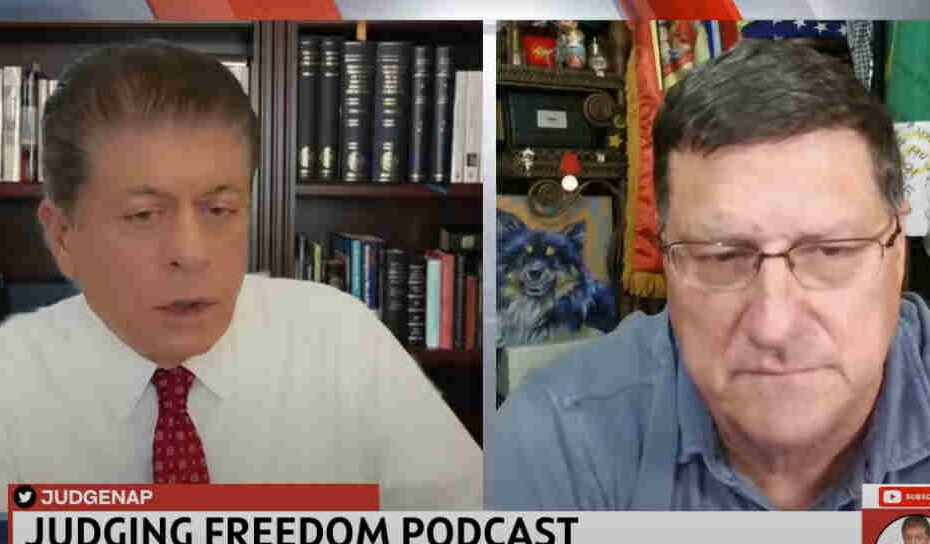
Read the full transcript of former UN weapons inspector Scott Ritter’s interview on Judging Freedom Podcast with host Judge Napolitano on “Can We Trust the Israel–Hamas Deal?”, October 9, 2025.
Understanding Phase One of the Trump Peace Deal
JUDGE NAPOLITANO: Hi, everyone. Judge Andrew Napolitano here for Judging Freedom. Today is Thursday, October 9, 2025. Scott Ritter joins us now. Scott, a pleasure. Thank you very much for accommodating my time. What is your understanding of phase one of the so-called Trump peace deal which the President announced Hamas and the Israeli government had agreed to last night?
SCOTT RITTER: My understanding is that there will be a hostage release, that is the Israelis that Hamas and Islamic Jihad are currently holding. The living and the bodies of those who have perished will be turned over to Israeli authorities and the Israelis will be freeing some 1,200 Palestinian hostages or prisoners, whatever term you want to use.
And then Israel will withdraw to, I guess what it is, the 70% line, meaning they will withdraw from 70% of Gaza. And then once this is done, I think they move on to the next phases of this ceasefire peace plan.
JUDGE NAPOLITANO: Is there a requirement or a phase, I don’t know what terminology to use, for Hamas to lay down its arms?
SCOTT RITTER: I believe it is. I believe that part of the agreement that Hamas has signed on, and people should understand Hamas, this isn’t the first time the issue of disarmament has been raised. And Hamas has said in the past that it is willing to disarm if certain conditions are met, including Palestinian statehood.
And Hamas has agreed to disarming the timetable of that. How it will be done, I still think that those are details that have yet to be solidified and acted on and could lead to Israel doing what Israel does best, which is to violate ceasefires, lose their patience and resume bombing. But I think this agreement, if it’s going to reach maturity, requires Hamas to be verifiably disarmed.
Hamas’s Leverage and Trust Issues
JUDGE NAPOLITANO: Why would Hamas give up the only leverage it has, which is the hostages and its weapons, in a trust with Israel, which has betrayed that trust regularly, consistently, systematically and uniformly?
SCOTT RITTER: Because Hamas wants a Palestinian state. I mean, that’s what this was all about. This was about creating the conditions for a Palestinian state. And now Hamas actually has a deal.
Again, people need to put this in perspective. Go back to the days and weeks after October 7, 2023, when the initial discussions were being had about a ceasefire and what Hamas’s demands are. Every single demand of Hamas has been met. I mean, this is a Hamas peace treaty.
Trump has packaged it up and has sold it to the Israelis, but Hamas is getting everything they asked for. So why would Hamas do this? Because this is what they’ve wanted all along. The idea that they’re a terrorist organization that exists just to run around and blow things up and commit violence and kill Israelis is absurd in the extreme.
Hamas has been fighting for a Palestinian state, for a Palestinian homeland, and this agreement creates the opportunity for that. So that’s exactly why Hamas would be willing to do all this.
The Two-State Solution and Netanyahu’s Coalition
JUDGE NAPOLITANO: Does the agreement provide for a Palestinian state? Because Netanyahu has said over and over and over again it’ll never happen, he’ll never agree to it. And quite frankly, he knows if he does agree to it, Smotrich and Ben-Gvir and their colleagues leave the government.
SCOTT RITTER: So sad. Too bad to be Benjamin Netanyahu. This agreement, if it’s going to reach maturity, requires a pathway to a two-state solution, international commitments, guarantors, including the United States and its president.
And Israel of course, always has the option to blow things up and walk away. But I think the Israelis understand that they live in different times right now. One, this president has committed a tremendous amount of political capital to this. This is in his imagination the pathway to a Nobel Peace Prize. And he’s not going to let Bibi Netanyahu get in the way of this.
And two, one of the reasons why Netanyahu is even talking about this is that Israeli support in the United States is rapidly chipping away. It’s actually pouring off what was a robust infrastructure now is a bare skeleton. Donald Trump has acknowledged that Israel doesn’t have control over the Congress that they once enjoyed, the absolute control.
And we see an important constituents in the United States. Support for Israel is rapidly waning. The “Make America Great Again” contingent are tired of finding out that America is second to Israel. And Netanyahu has to be very careful about how he proceeds.
If his coalition government collapses, so be it. But if he actually means to join a viable peace plan that is supported by the United States, that looks like it’s not just a temporary stopgap measure, he might be able to build a new coalition. The coalition he has right now is an extremist coalition premised on the necessity of conflict.
If Netanyahu chooses the path to peace, there’s a possibility he could build a temporary governing coalition that keeps him as prime minister and doesn’t require him to have the Ben-Gvirs and the Smotriches and these other genocidal maniacs.
The Role of U.S. Military Involvement
JUDGE NAPOLITANO: President Trump said, I’ll play the clip in a minute, that the United States military was instrumental in getting this agreement. What do you think he meant by that?
SCOTT RITTER: I think he’s, this whole “Peace through Strength” thing, threatening Hamas, “there will be hell to pay.” As if Gaza hasn’t been subjected to hell many times over.
There were the movements of American military aircraft into the region.
That creates the perception of the threat of military force. And I think what Trump is believing, leading himself to believe, is that this is what pushed Hamas into accepting this peace deal.
But I would remind the president, let him enjoy his moment. But at some point in time, I would whisper in his ear, Hamas won. Hamas won. They got everything they wanted. Thank you, Mr. President.
JUDGE NAPOLITANO: On behalf of Hamas, here’s Trump mentioning military involvement. He mentions a lot of other things, as he often does, but I want your thoughts on this. Chris, cut number 18.
VIDEO CLIP BEGINS:
DONALD TRUMP: We had some tremendous help, as you know, with everybody from Steve Witkoff and Jared Kushner and Marco, and we had everybody. JD, the whole group was just amazing. And the military was, as you know, very instrumental in getting this done. We have a great military with great leadership. The whole world came together, to be honest, so many countries that you wouldn’t have even thought of, they came together. The world has come together around this deal.
VIDEO CLIP ENDS:
JUDGE NAPOLITANO: He likes to thump his chest, I guess he still believes he could win the Nobel Peace Prize, which will be announced tomorrow, Friday, October 10th, at five in the morning, Eastern time. But I still don’t get this. “And the military was, as you know, very instrumental in getting this done.” Did the President of the United States threaten either Netanyahu or Hamas with the entry of the United States military into Gaza?
The Complex Negotiations Behind the Deal
SCOTT RITTER: Yeah, absolutely not. Not Netanyahu. He threatened Hamas. “Oh, there will be hell to pay.” And then he deployed military assets accordingly. So it was a direct threat to Hamas. Whether Hamas paid any attention to it is, the president’s world is a very simplistic world.
But underneath the simplicity of how his brain operates, there’s a lot of complex negotiations taking place. Qatar was instrumental to making this peace deal happen. Hamas was instrumental. The people who negotiated this peace deal, the ones that Israel was trying to assassinate in Qatar, when they bombed that Middle Eastern nation illegally, by the way, and other Arab nations.
People need to recall that when Trump first put his, “I’m going to forcefully evacuate everybody. We’re going to turn this into a beachside resort.” I said, that is an opening gambit. And he got a response from Arab nations. And then later on, he backed off and played like he didn’t want to do that. But now we’re back to that.
We have a deal now, because those Arab nations that put a counteroffer to Trump, that counteroffer is at play here. There’s not going to be the forceful evacuation of Palestinians from Gaza. They’ll rebuild Gaza. That was the original counter proposal.
The thing that tied that down was Hamas. And look at the president. He made a compromise because he said Hamas had to go. You could declare yourself to be Hamas and ask for amnesty and stay, but you won’t have any role in a future government. Hamas came back and said, “Now we’ll buy into this Palestinian elite architecture, the technocrats and all that, but we’re going to play a role, too.”
The president went, “Okay,” and that’s what sealed the deal, was the continued political viability of Hamas. But, yeah, the president verbally flexed some muscles, but I don’t think that that verbal flex had anything to do whatsoever with a very lengthy, complex, ongoing negotiation that’s been taking place.
The Future of Gaza and Palestinian Statehood
JUDGE NAPOLITANO: When the Palestinian hostages, chief among whom is, you know his name, he’s been there for 20 years, Marwan Barghouti, when they are freed, what is there for them to come back to in Gaza? Anything but rubble?
SCOTT RITTER: I mean, look, Gaza has been destroyed, but what’s there? Palestine. You think they give a damn about buildings and marble and all the garbage that Donald Trump and his elites care about? Palestine. The thought is now reality.
Gaza isn’t just an open-air concentration camp. Gaza is going to be part of a free and independent Palestinian state. And that’s what they’re going back to. And that’s what they’ve been struggling for, for all these years.
Trump’s Claims About Tariffs and Peace
JUDGE NAPOLITANO: Donald Trump, as usual, overplaying his hand, saying he’s brought peace to the world. I can’t resist running this for you, Scotty. This is on a telephone interview with Sean Hannity last night, just like the other clip was. But it’s certainly the President. Cut number 19, Chris.
VIDEO CLIP BEGINS:
DONALD TRUMP: You know, having the ability to deal with trade, having the ability to use tariffs to help me make a point. The tariffs have brought peace to the world. I’m telling you, they brought peace to the world. And not only here, but with so many other deals.
You know, I’ve made seven peace deals where countries were, in many cases, 30, 31 years, 135, 137 years they’ve been fighting and millions of people being killed. And I brought peace.
VIDEO CLIP ENDS:
JUDGE NAPOLITANO: I’m not so sure I understand what he’s talking about. Tariffs have strengthened the East, strengthened BRICS, strengthened Shanghai and taught two-thirds of the world, they don’t need to engage in commercial intercourse with the United States if they don’t want to.
The Real Factors Behind the Peace Deal
SCOTT RITTER: Yeah, no, this was, he was verbally dictating the Nobel Peace Prize letter that he wants to receive. He lives in his own fantasy world. Look, let’s give the President credit where credit is due. I don’t know the extent to which his tariffs did this.
I will say this, that when he put that proposal out about clearing out Gaza forcefully and all this stuff, it did cause the Arab world to come together and put together a counter proposal. And that counter proposal is the heart of this deal. And that was done before tariffs, before threats for anything.
So the Arab world has always wanted a deal, but the problem was dealing with Israel, how to get Israel to play responsibly. And this is where Donald Trump has contributed, because only the United States can make Israel play responsibly. And it wasn’t through sanctioning Israel or anything like that.
It was the reality that Hamas’s master plan, which again was articulated right after October 7, of sucking Israel into Gaza and letting Israel be Israel, and the horrific reality of Israel will cause the world to shy away, turn away, and support to bleed off. That plan worked.
And Trump was able to take advantage of the fact that Israel recognized it was losing support internationally and more critically amongst an American domestic constituency. And this is what brought it to the table.
So Trump can live in his own world. He can populate it with whatever imaginations he wants. But I think when you do a cause-effect analysis of what actually pushed this peace plan forward, it’s not going to be about Trump tariffing people and flexing muscles.
It’s going to be about support for Israel rapidly waning, creating a panic in Israel. Why else would an Israeli prime minister go on American social media not once, but twice and say, “I didn’t kill Charlie Kirk, we didn’t kill Charlie Kirk.” Because he understood that even the thought of Israel being involved was stripping aid away.
Why did he go out and challenge the First Amendment of the United States, asking Americans on social media to rally behind Israel and isolate and deplatform those people who didn’t agree? He didn’t understand the politics of the time. That didn’t rally people, that alienated people.
Again, the MAGA crowd was going, “That sounds an awful lot like Israel first, America last,” and support waned. So I think it’s what Hamas did that shaped this potential more than anything the president did. The president provided leadership, and I’ll give him that.
JUDGE NAPOLITANO: Scott Ritter, thank you very much. I appreciate you coming on, my friend. I know you have a busy morning. All the best. We’ll look forward to seeing you next week. Thank you, my friend.
SCOTT RITTER: Thank you.
JUDGE NAPOLITANO: Of course, they’re coming up later today at 1 o’clock this afternoon from somewhere in China, Pepe Escobar. At 2 o’clock, Colonel Lawrence Wilkerson. At 3 o’clock, Professor John Mearsheimer. At 4 o’clock, Professor Jeffrey Sachs. Judge Napolitano for Judging Freedom.
Related Posts